
Ilike
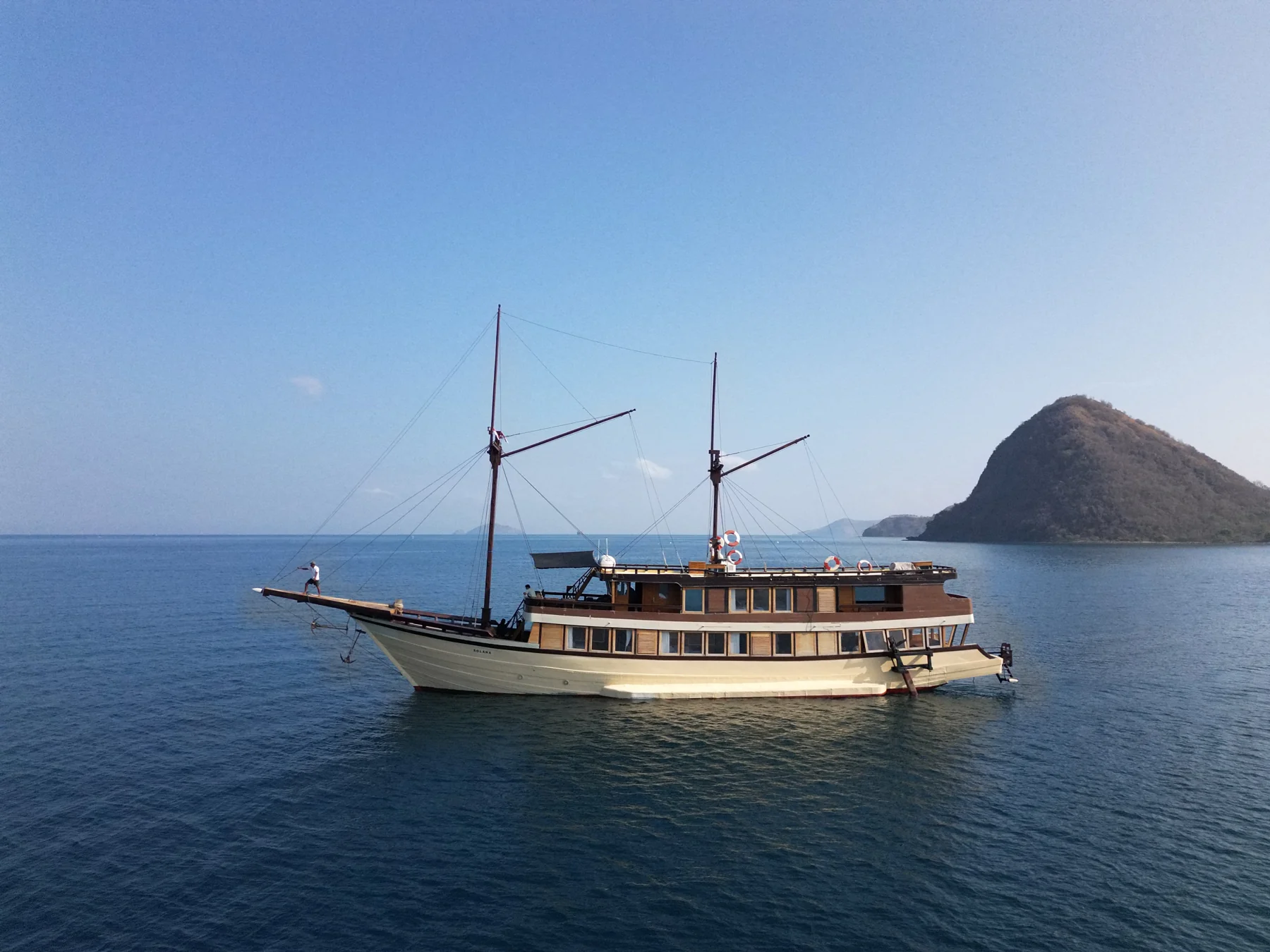
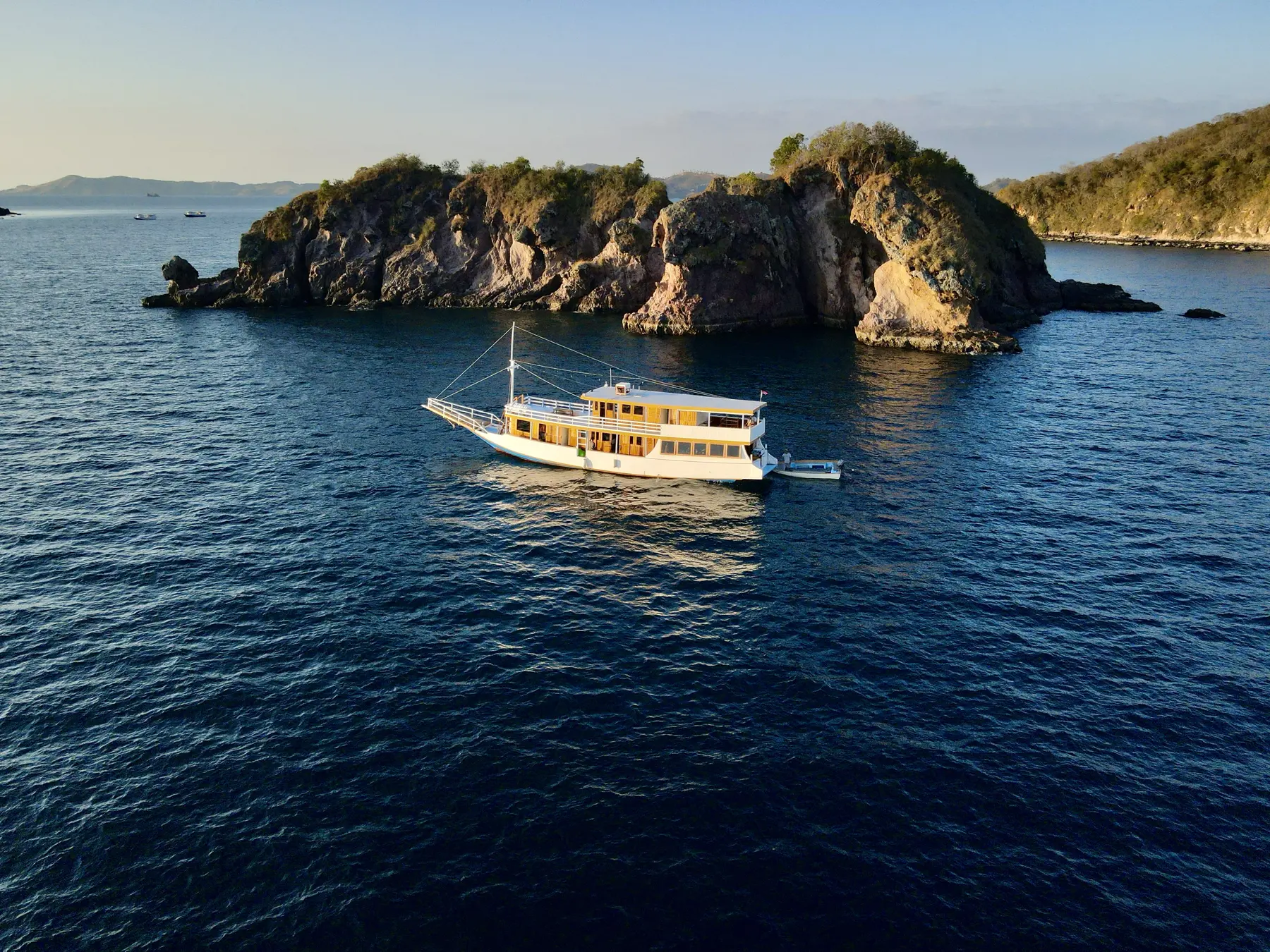
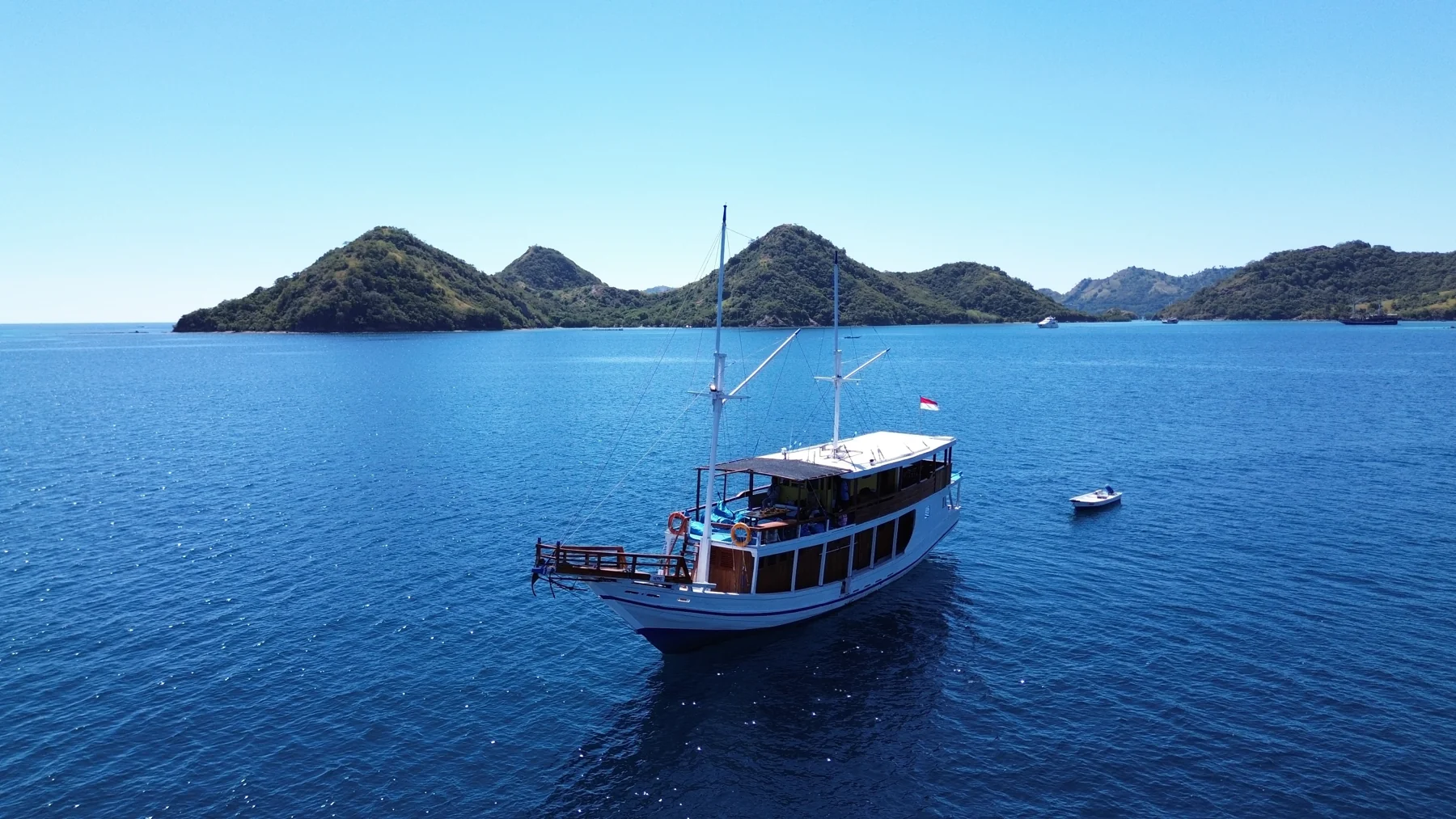
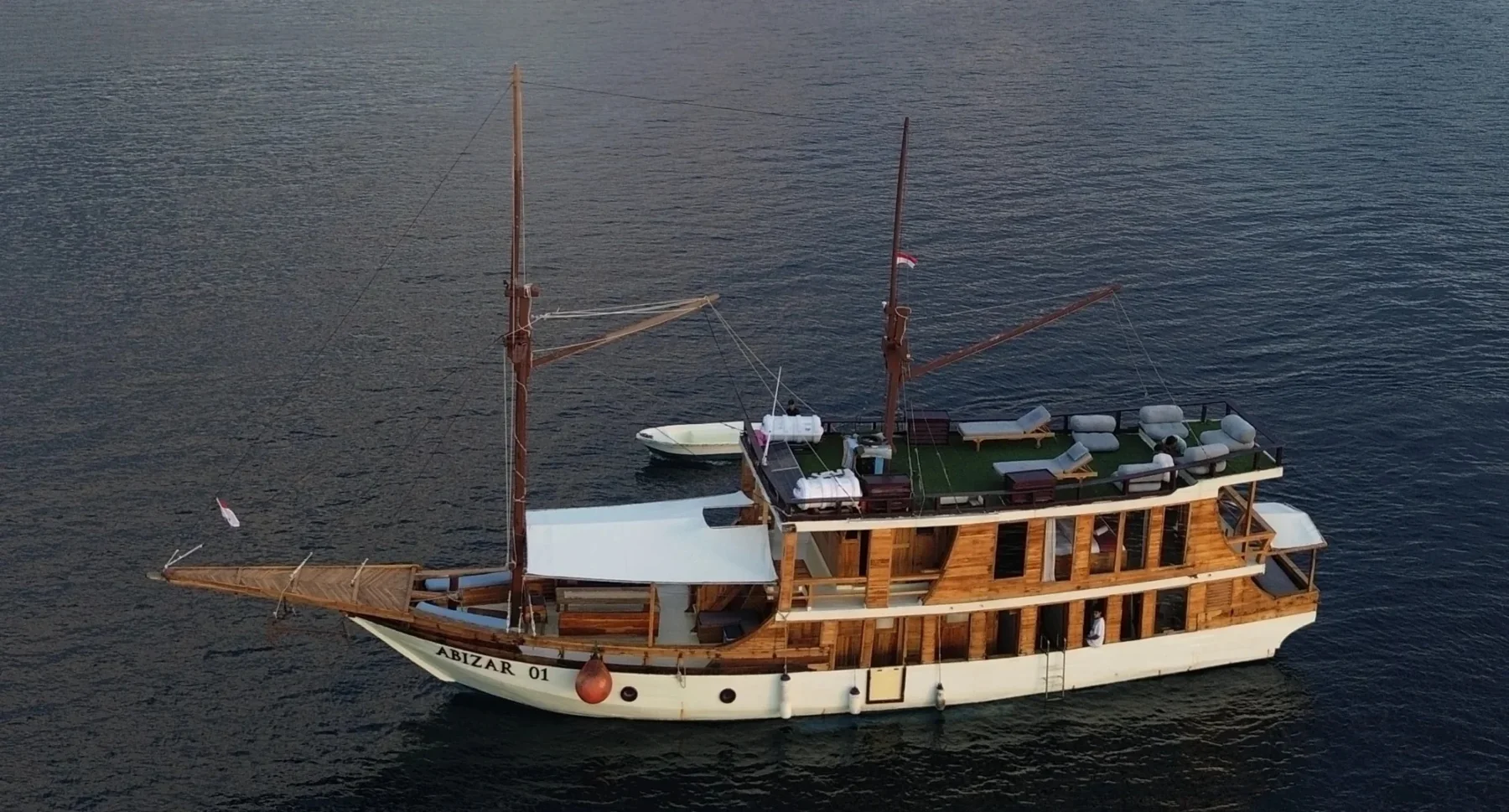
The ILIKÉ was built on Sulawesi in Bira in 2010 in the traditional Indonesian way.
The hull is made of ironwood and the body is teak.
MSY likes to cater to up to 14 guests. It has 7 cabins that have AC with an ensuite bathroom and hot shower, toilet, and sink. Indonesian and International meals will be served in the spacious saloon with an open kitchen, or in the outdoor sitting area at the stern of the boat, well protected from wind while sailing. The comfortable dive deck in front of the boat is one of the most spacious on Indonesian liveaboards. As a diver, you can choose to dive on Air or Nitrox from our membrane Nitrox compressor. Between dives, you are invited to catch some sun on our sun deck, where you will also enjoy spectacular sunsets while sipping a cool drink!
Où vous dormirez
Les cabines
Cabines à bord du Ilike
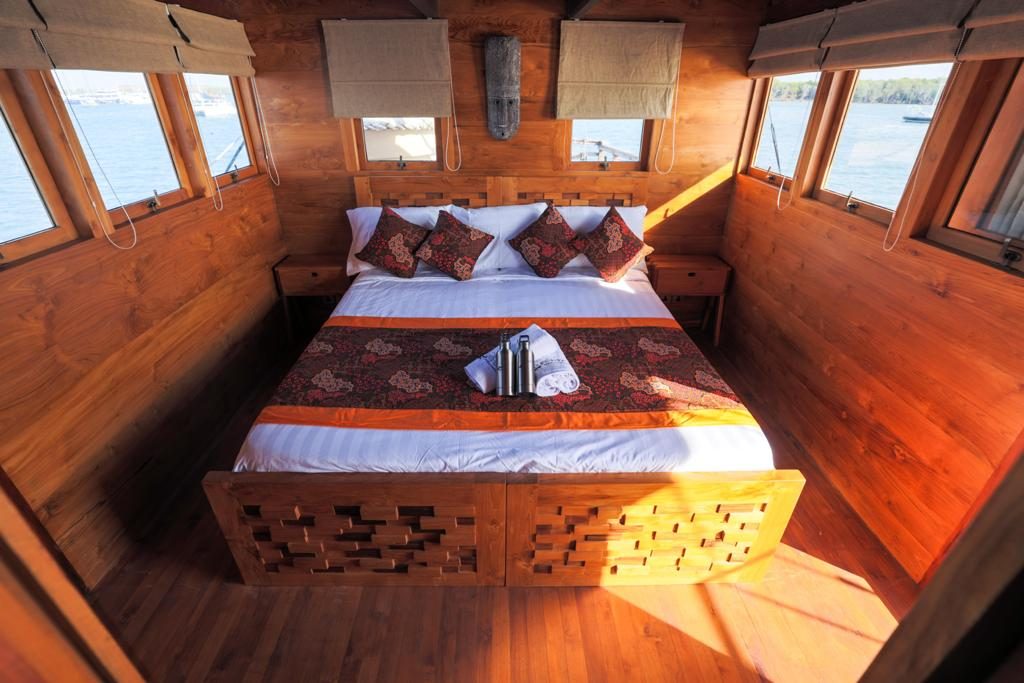
Seaview Suite
2 guests · double
Suite with a double bed and windows onto the sea on both sides. Air conditioning and an en-suite bathroom with hot shower, toilet and sink.
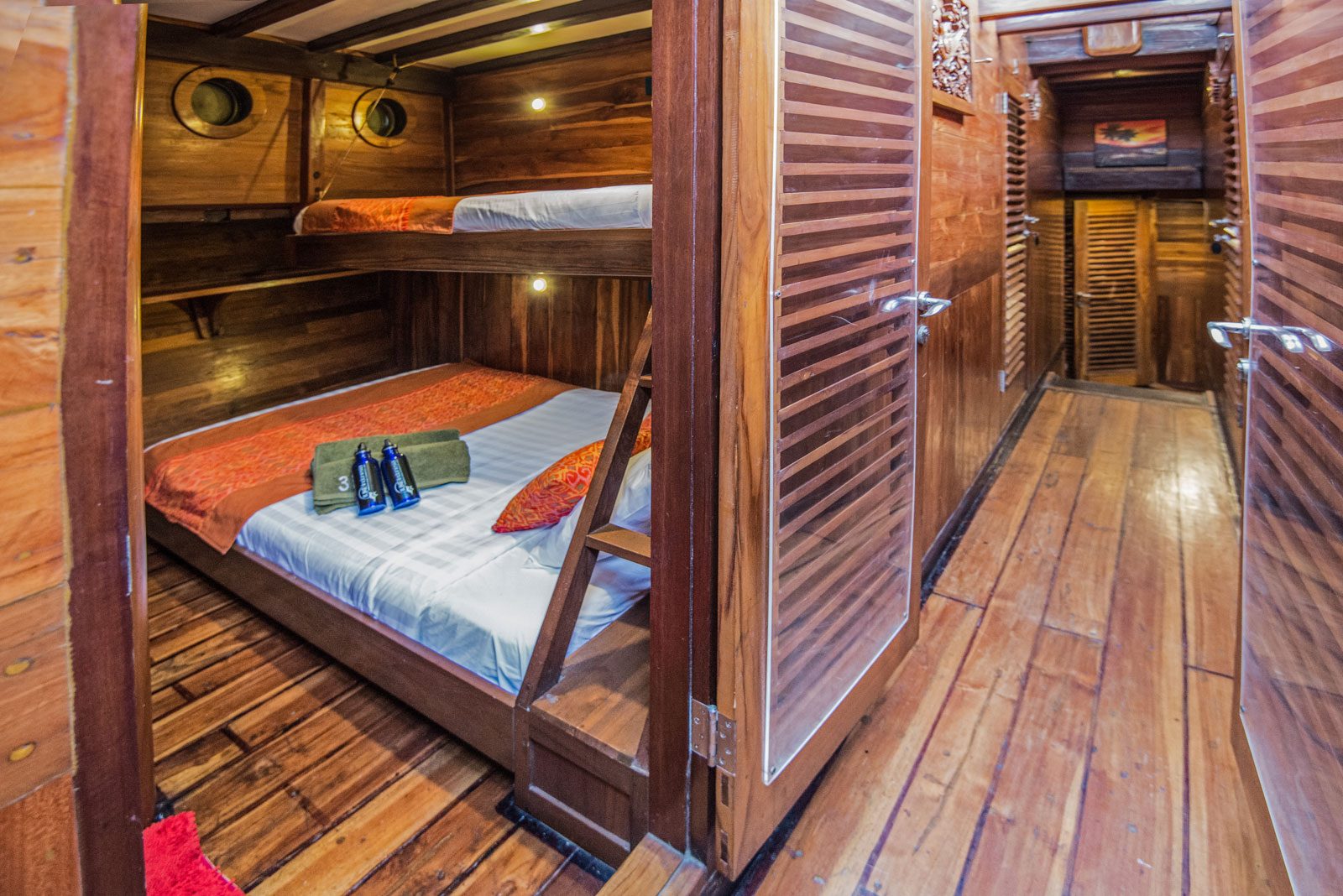
Standard Cabins
2 guests · double
Lower deck, next to engine room. Double bed below and bunkbed on top. Fully air-conditioned. En-suite bathroom with hot water shower, toilet and sink.
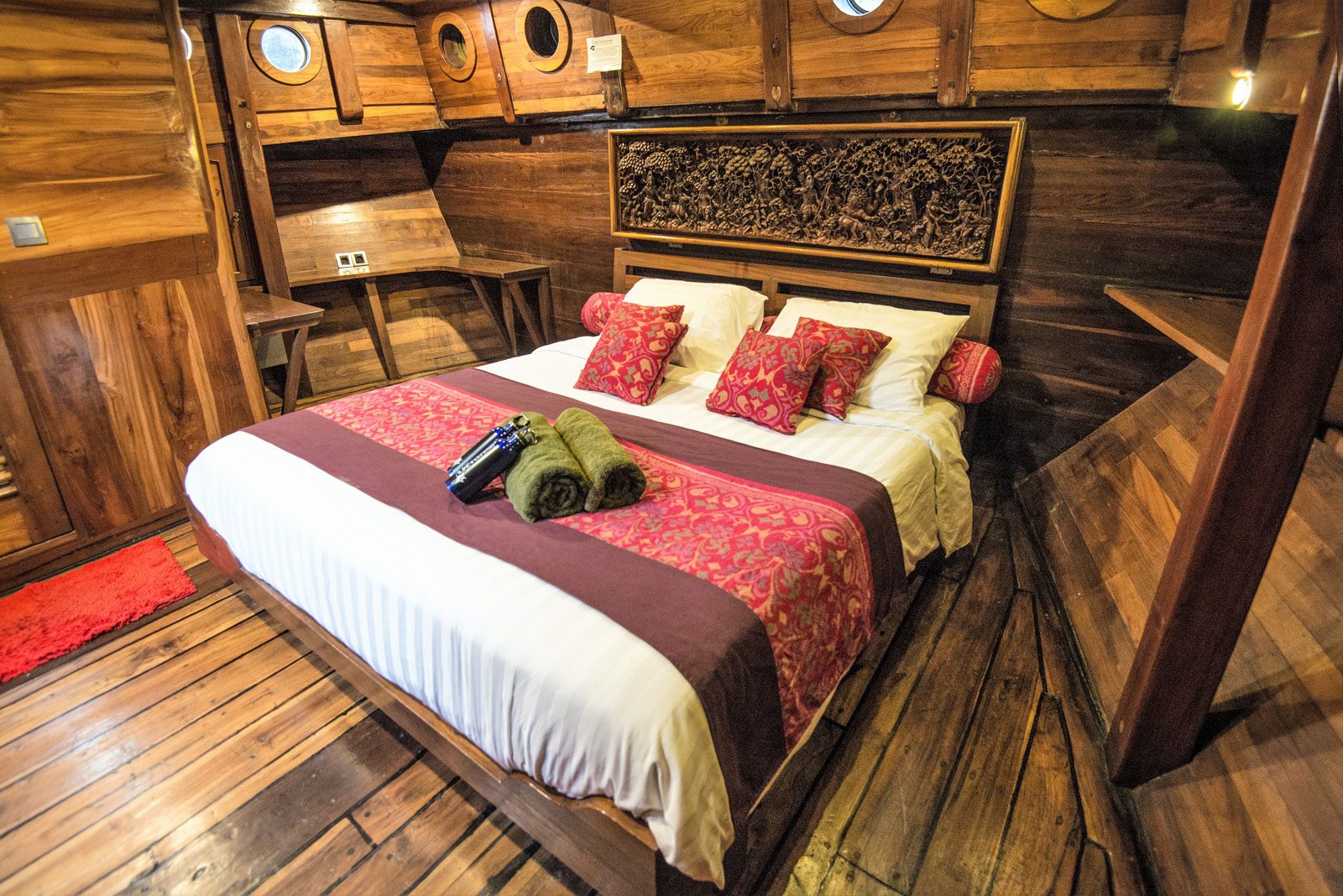
Suite
2 guests · double
Suite with a double bed and portholes. Air conditioning and an en-suite bathroom with hot shower, toilet and sink.
Superior Cabins
2 guests · double · 4 cabins of this type
Lower deck. Double bed below + single bunk bed on top. Fully air-conditioned. En-suite bathroom with hot water shower, toilet and sink.
Destination
Itinéraires
Itinéraires à bord du Ilike
Raja Ampat 8 Days
Day 1 | Arrive to the ILIKE at Sorong port.
Day 2 | Misool Daram Islands
Day 3 | Misool Fiabacet/ Boo Island
Day 4 | Misool Wayilbatan
Day 5 | Penemu Island
Day 6 | Dampier Strait
Day 7 | Dampier Strait
Day 8 | Disembark in Sorong Port
Raja Ampat – The Four Kings of the Coral Triangle
Raja Ampat, meaning “Four Kings” in Indonesian, is an archipelago of more than 1,500 islands located in Western Papua. The four main islands are Waigeo, Batanta, Salawati, and Misool. Positioned in the heart of the Coral Triangle, Raja Ampat is recognized as the most biodiverse marine ecosystem in the world, with over 500 species of corals and thousands of fish species. Deep ocean currents rise into shallow waters, bringing nutrients that support this extraordinary underwater life.
Misool – Southern Marine Sanctuary
Misool is known for its breathtaking underwater landscapes and flourishing marine life. Divers can explore coral walls, pristine coral gardens, underwater pinnacles, and schools of fish. The island is also home to the elusive epaulette shark, also known as the walking shark, a nocturnal species that moves across the reef using its fins. Much of Misool is protected as a marine park, established in cooperation with local communities to conserve the area and prevent fishing.
Penemu – Lagoon Views and Pristine Reefs
Penemu is famous for its postcard-perfect viewpoint overlooking a maze of turquoise lagoons and limestone islets. A short hike leads to one of the most iconic panoramas in Raja Ampat. Beneath the surface, Penemu offers spectacular reef dives with hard coral ridges, swift currents, and a vibrant abundance of reef fish — making it a favorite among wide-angle photographers.
Dampier Strait – Where Big Fish Gather
The Dampier Strait, located between Waigeo and Batanta, is well known for strong currents carrying an abundance of nutrients. This attracts larger marine species, including giant trevallies, yellowfin tuna, rainbow runners, and several shark species such as blacktip, whitetip, and grey reef sharks. Remarkably, this is one of the few places in the world where both species of manta rays can be seen on the same dive site.
Night Diving and Cultural Encounters
Northern Raja Ampat offers beautiful night diving experiences, with diverse marine life emerging after dark. Visitors also have the opportunity to explore local villages or hike to scenic viewpoints overlooking the islands.
Inclus
- VAT, Airport Transfer, Drinking Water, Tea & Coffee, Welcome Cocktails, Full-Board Meal Plan (All meals), Snacks, Diving Package, Extra Dives, Land Excursions, Cabin Towels, Complimentary Toiletries, Deck Towels
Non inclus
- Dive Insurance, Travel Insurance, Gratuities, Local Flights, Alcoholic Beverages, Soft drinks, Nitrox, Private Dive Guide, Rental Gear, Laundry / Pressing Services, Massage.
- Trip fees (Incl fuel charge, Port fees, eco projects, etc...) : 34 US$ par personne
- Marine Park Fee Raja Ampat : 134 US$ par personne
Alor - Timor Leste - Alor 8 days
Day 1 | Embark in Alor
Day 2 | Alor/Kalabahi Bay
Day 3 | Pura Island/Pantar Island
Day 4 | Lembata Island
Day 5 | Paloe Island / Maumere Bay
Day 6 | Gili Lawa Laut / Sabolan Island
Day 7 | Crystal Rock / Castle Rock
Day 8 | Manta Alley / Pink beach
Day 9 | Komodo Central + walk with the dragons
Day 10 | Disembark in Labuan Bajo
A diving liveaboard route from Alor to Timor-Leste and back offers an exceptional journey through some of Southeast Asia’s most untouched and biodiverse marine environments. This circular route begins and ends in Alor, part of the Indonesian Lesser Sunda Islands, and crosses into the rarely explored waters of Timor-Leste, offering a mix of adrenaline-filled drift dives, muck diving, and encounters with large pelagics.
The journey begins in Kalabahi Bay, Alor’s main port. After boarding and a check dive in the calm waters around Pura Island, the liveaboard heads east along Alor’s rugged southern coast. These initial dive sites, such as Clown Valley and Shark's Galore, are renowned for their vibrant coral gardens, steep drop-offs, and prolific marine life, including reef sharks, tuna, and the occasional mola mola. Divers can also encounter incredible visibility and rich macro life, with nudibranchs, pygmy seahorses, and frogfish hiding among the coral rubble.
As the boat sails eastward, the route typically passes through the Ombai Strait, a deep channel known for strong currents that attract large pelagics. Sites like Beangabang offer an exciting blend of muck and reef diving. This region is also culturally rich, and during our itineraries we try to include a village visit to experience traditional Alorese weaving and dance.
Crossing into Timor-Leste, the diving shifts to a frontier-style exploration. Few boats venture into these waters, making each dive feel like a first-time discovery. Around Atauro Island, the reefs are stunningly pristine. Towering walls plunge into deep blue, covered in colorful sponges and soft corals. Schools of barracuda, jacks, and fusiliers patrol the reefs, and larger species like eagle rays, thresher sharks, and even whales can be spotted in the deeper waters.
Atauro’s northern sites, such as Adara and Shark Point, are especially impressive, with 30-40 meters of visibility and minimal diver traffic. The marine biodiversity here rivals some of Indonesia’s most famous destinations but with far fewer crowds.
After exploring Timor-Leste’s highlights, the liveaboard circles back to Indonesian waters. Depending on what the ocean decides to offer us in Timor Leste, we can add a stop at Wetar Island, if time allows us. This remote, volcanic island offers untouched reefs, caves, and dramatic drop-offs,occasionally visited by oceanic mantas.
Throughout the journey, the surface intervals are as memorable as the dives. With volcanic backdrops, traditional villages, and starlit evenings on deck, this route offers not just world-class diving but also a deep immersion into the culture and wild beauty of the region. The circular route from Alor to Timor-Leste and back offers a rare combination of adventure, biodiversity, and serenity—an unforgettable experience for experienced divers looking for adventure and exploration!
Inclus
- VAT, Airport Transfer, Drinking Water, Tea & Coffee, Welcome Cocktails, Full-Board Meal Plan (All meals), Snacks, Diving Package, Extra Dives, Land Excursions, Cabin Towels, Complimentary Toiletries, Deck Towels.
Non inclus
- Dive Insurance, Travel Insurance, Gratuities, Local Flights, Alcoholic Beverages, Soft drinks, Nitrox, Private Dive Guide, Rental Gear, Laundry / Pressing Services, Massage.
- Trip fees (Incl fuel charge, Port fees, eco projects, etc...) : 34 US$ par personne
Komodo 8 Days
Day 1 | Arrive to the ILIKE at Labuan Bajo Port.
Days 2-6 | 3 to 4 dives / day. Komodo North & Central, including famous dive sites like Batu Bolong, Manta Point, and Tatawa Besar
Day 7 | 1 or 2 dives before cleaning equipment en heading back to port.
Day 8 | Disembark at Labuhan Bajo Port
We will embark ILIKE in Labuan Bajo, the gateway from Komodo National Park where Is known for some of its cooler waters, beautiful corals, impressive fish life and fast currents. Komodo National Marine Park, because of its location, it is one of the best places in the world where you can find an amazing biodiversity. It is part of the famous CORAL TRIANGLE and is declared a UNESCO WORLD HERRITAGE site. In the north of Komodo NMP we have the Flores Sea where after few miles from the coast reaches depths of 5000 meters, or even more towards Banda Sea. At the south, we have the Indian Ocean with also great depths a few miles out. Komodo NMP has an average depth of about 150 meters, so when we have tidal movement of 2 meters rising or falling tide, the water comes from very deep and needs to rush through Flores and Komodo Island where only shallow water is found. The con- sequences are that the water has to pass between islands at high speed, forming currents that provide nutrients and oxygen rich waters to the fish and the coral reef. Currents are for the underwater world like the logistics in any big city. Having strong currents equals to have more shipments of supplies for the city. Plenty of nutrients arrive to these waters and makes and spectacle of life wherever you look. The big difference of characteristics between Flores Sea and Indian Ocean gives a more variety of marine life at different islands. The environment below and above water at the Northern Komodo has nothing in common with the South.
North Komodo National Park the water temperature is usually nice and warm from the Flores Sea (27°-29°). There is an abun- dance of fish on these underwater pinnacles, schooling sur- geons, big eye jacks, snapper or barracudas and pelagic are a common site. The further South we travel the water temperature will drop (18°- 24°). Padar island has some beautiful sites where we can start to feel the influence of the Indian Ocean. More nutrients in the water is giving the corals a different look, co- lours are sharper, fish life is about to change. Even further South, we have Nusa Kode this horseshoe shaped bay has stunning corals. Not only in a rainbow of colours but also the size. Fish live in abundance and creatures you may have never seen before in your life, they may remind you the monsters that live under your bed as a child. There is muck diving in places you least expect and under water pinnacles attract big schools of snapper, big eye jacks, surge- on fish, barracuda’s and Spanish mackerel. You feel like you fly over beautiful coral gardens that you can barely see because of the amount of fish darting in the currents. Manta rays have their own cleaning stations, that we can visit. Here we can observe them getting cleaned but if the currents bring in the right nutrients and krill, they will start to feed, shooting to the surface to dive down while with their mouths wide open, filtering the water.
Your trip is not complete without meeting the last living dinosaurs,the Komodo Dragons. you will get a chance to see them up close at the National Park. With a bit of luck, you will also see the macaque monkeys, some deer’s, wild pig and wild horse.
Inclus
- VAT, Airport Transfer, Drinking Water, Tea & Coffee, Welcome Cocktails, Full-Board Meal Plan (All meals), Snacks, Diving Package, Extra Dives, Land Excursions, Cabin Towels, Complimentary Toiletries, Deck Towels.
Non inclus
- Dive Insurance, Travel Insurance, Gratuities, Local Flights, Alcoholic Beverages, Soft drinks, Nitrox, Private Dive Guide, Rental Gear, Laundry / Pressing Services, Massage.
- Trip fees (Incl fuel charge, Port fees, eco projects, etc...) : 34 US$ par personne
- Marine Park Fee Komodo : 123 US$ par personne
Raja Ampat 9 Days
Day 1 | Arrive to the ILIKE at Sorong port.
Day 2 | Misool Daram Islands
Day 3 | Misool Fiabacet/ Boo Island
Day 4 | Misool Wayilbatan
Day 5 | Penemu Island
Day 6 | Yangeffo Island
Day 7 | Waisai
Day 8 | Dampier Strait
Day 9 | Disembark in Sorong Port
Raja Ampat refers to an archipelago with more than 1500 islands with the four main islands of Waigeo, Batanta, Salawati and Misool and is part of the Coral Triangle making it one of the richest bio diversity of the world. Because his strategic location on the western Pacific Ocean, currents troughflows arriving to the archipelago from very deep water to shallow water, making stratospheric numbers more that 500 different species of corals in that area, ten times more than the Caribbean.
Raja Ampat translates from the Indonesian language to Four Kings. Misool, the most southern island, has an abundance of marine life, a variety of underwater seamounts, smaller pinnacles, coral walls and coral gardens, covered in giant sea fans, soft corals in all colours, massive table corals and countless fish. This is a great place to find the elusive epaulette shark, or walking shark. It is a nocturnal shark that sneaks up on its pray by walking closer and closer to it. It is largely a marine park set up by Misool Eco Resort in cooperation with all the local villages, not to fish inside this area. It gets patrolled by the park rangers.
The Dampier Strait, between Waigeo and Batanta, beautiful coral gardens, underwater pinnacles or seamounts, sandy bottom with coral heads and cleaning stations. Here we can find even more nutrients bringing in bigger predators like giant trevallies, yellow fin tuna, rainbow runners and even some sharks like blacktip, grey reef, white tip sharks. It is also one of the few places in the world where we can find two species of Manta rays on the same dive sites. Night dives are a joy in Northern Raja Ampat. We offer you the opportunity to visit local villages or there hike up to one of the lookout points.
Inclus
- VAT, Airport Transfer, Drinking Water, Tea & Coffee, Welcome Cocktails, Full-Board Meal Plan (All meals), Snacks, Diving Package, Extra Dives, Land Excursions, Cabin Towels, Complimentary Toiletries, Deck Towels.
Non inclus
- Dive Insurance, Travel Insurance, Gratuities, Local Flights, Alcoholic Beverages, Soft drinks, Nitrox, Private Dive Guide, Rental Gear, Laundry / Pressing Services, Massage.
- Trip fees (Incl fuel charge, Port fees, eco projects, etc...) : 34 US$ par personne
- Marine Park Fee Raja Ampat : 134 US$ par personne
North-Sulawesi - Halmahera 9 days
Day 1 | Arrive to the ILIKE at Bitung port.
Day 2 | Lembeh Straits
Day 3 | Bangka Island
Day 4 | Tifore Island
Day 5 | Goriachi Islands
Day 6 | Goriachi Islands
Day 7 | Patintie Strait, Saleh Kecil Island
Day 8 | Patintie Strait, Saleh Kecil Island
Day 9 | Disembark ILIKE in Babang / Labuha
We start this adventurous journey in Bitung, capital of Lembeh Strait. In Lembeh most of the macro photographer’s dreams can became reality in matter of couple of dives. Muck diving at its best!!!
On the Northern edge of the North-Sulawesi island, we also dive a full day around Bangka island. Bangka's waters are home to creatures like pygmy seahorses, frogfish, nudibranchs, and even larger species such as eagle rays and sharks. The dive spots could not be more different: slopes with beautiful coral gardens, spectacular underwater caves, bizarre rock towers in adventurous underwater landscapes, steep rock faces or sandy places. “Batu Sahaung” offers extraordinary rock formations and plenty of fish. At “Batu Gosoh 1”, divers will find steep rock faces beautifully carpeted with soft corals and a wide variety of nudibranch. "Batu Gosoh 2" is a spot with frequent current, you dive between rock towers, which fall down to 30 meters and thus give the feeling to dive through urban canyons.
After we start crossing to Halmahera we will visit Tifore Island in the middle of the Moluccan sea. Tifore is separated from main land by more than 70 miles. An underwater pinnacle close to the island hides, when the current its favourable, a big school of Barracudas can be seen along with other big pelagic fish.
Arriving to Halmahera, Goraichi Island is a system of islands right at the edge of the Molucca sea offering a big diversity in Macro or big pelagic. The islands are famous for their pristine reefs, which are teeming with vibrant hard and soft corals. Divers can encounter a diverse array of marine life, including schools of fish, sharks, and manta rays. The Goraichi Islands are known for their excellent environmental conservation efforts, which have helped maintain the health and beauty of their reefs. This makes the diving experience here particularly special, as the underwater ecosystems are in excellent condition. The dive sites around Goraichi feature stunning underwater landscapes, including slopes, walls, and pinnacles, providing a range of different of diving experiences.
Then in the heart of Halmahera, we find a channel in the Patintie Strait where pinnacles and coral formations are different due to currents being funnelled through the channel as two seas meet. Saleh Kecil is a small island in the strait and has impressive coral formations, gentle slopes, and vibrant marine life, ranging from macro critters to large pelagic species. The biodiversity here is astounding, with regular sightings of reef sharks, barracudas, and colorful schools of fish.
Inclus
- VAT, Airport Transfer, Drinking Water, Tea & Coffee, Welcome Cocktails, Full-Board Meal Plan (All meals), Snacks, Diving Package, Extra Dives, Land Excursions, Cabin Towels, Complimentary Toiletries, Deck Towels.
Non inclus
- Dive Insurance, Travel Insurance, Gratuities, Local Flights, Alcoholic Beverages, Soft drinks, Nitrox, Private Dive Guide, Rental Gear, Laundry / Pressing Services, Massage.
- Trip fees (Incl fuel charge, Port fees, eco projects, etc...) : 34 US$ par personne
Alor - Komodo 10 days
Day 1 | Embark in Alor
Day 2 | Alor/Kalabahi Bay
Day 3 | Pura Island/Pantar Island
Day 4 | Lembata Island
Day 5 | Paloe Island / Maumere Bay
Day 6 | Gili Lawa Laut / Sabolan Island
Day 7 | Crystal Rock / Castle Rock
Day 8 | Manta Alley / Pink beach
Day 9 | Komodo Central + walk with the dragons
Day 10 | Disembark in Labuan Bajo
In Alor we find yet again great diversity, from vertical coral walls to sloping gardens covered in anemones for miles on end. We can dive an active volcano where you can see hot air bubbles coming from the rocks. Because we are in the Pantar Strait that brings lots of nutrients, we can also expect to see some dolphins or even whales welcoming us into the bay. With a bit of luck, the coolers currents bring us the Mola Mola or even Thresher shark. Kalabahi bay in West Alor, has world class muck diving in the bay, many different ghost pipefish hide in the mucky bottom, many nudi’s and all families of scorpion fish even the elusive rhynopia commonly spotted here.
We can visit a village that still lives the traditional ways and they will invite us for a traditional ceremony with dance performance. Near our anchoring in Pura Island we get the village kids with their wooden crafted goggles, showing of their free diving skills. Almost always locals approach the boat with their finest handcrafted “Ikat” fabrics made by a traditional technique.
The scenery above water is also spectacular as we can see 3 volcanos from our anchor place. In the north Flores Sea, we can find beautiful coral walls with overhangs and crevices, where you can find the tiniest pygmy seahorse to white tip reef sharks sleeping in the corals. Weather depending, we could visit the south of Pantar Island as Pulau Lembata that has to offer a very different landscaping. In the south Savu Sea has currents with different nutrients and a colder water temperature give life to another dimension. Bays full of exceptional world class macro and isolated rocks out at sea make this especial diving were the critters seems from another planet.
Paloe Island is an active volcano that will make us a transition to Maumere Bay, Volcanic topography with crystal waters and many baby reef fish along the steep walls. We will end up our trip in Maumere Bay where we can visit many islands inside the bay depending on weather or divers’ level. Inside the bay, it’s famous for black sand and macro critters hunting, opposite outer in the atolls where shear walls and crystal water is predominant.
Komodo National Marine Park, because of its location, it is one of the best places in the world where you can find an amazing biodiversity. It is part of the famous CORAL TRIANGLE and is declared a UNESCO WORLD HERRITAGE site.
In the North of Komodo NMP we have the Flores Sea where after few miles from the coast reaches depths of 5000 meters, or even more towards Banda Sea. At the south, we have the Indian Ocean with also great depths a few miles out. Komodo NMP has an average depth of about 150 meters, so when we have tidal movement of 2 meters rising or falling tide, the water comes from very deep and needs to rush through Flores and Komodo Island where only shallow water is found. The consequences are that the water has to pass between islands at high speed, forming currents that provide nutrients and oxygen rich waters to the fish and the coral reef. Currents are for the underwater world like the logistics in any big city. Having strong currents equals to have more shipments of supplies for the city. Plenty of nutrients arrive to these waters and makes and spectacle of life wherever you look. The big difference of characteristics between Flores Sea and Indian Ocean gives a more variety of marine life at different islands.
North Komodo National Park the water temperature is usually nice and warm from the Flores Sea (27a-29a). There is an abundance of fish on these underwater pinnacles, schooling surgeons, big eye jacks, snapper or barracudas and pelagic are a common site. The further South we travel the water temperature will drop (18-24°). Padar island has some beautiful sites where we can start to feel the influence of the Indian Ocean. More nutrients in the water is giving the corals a different look, colors are sharper, fish life is about to change.
Even further South, we have Nusa Kode this horseshoe shaped bay has stunning corals. Not only in a rainbow of colors but also the size. Fish live in abundance and creatures you may have never seen before in your life, they may remind you the monsters that live under your bed as a child. There is muck diving in places you least expect and under water pinnacles attract big schools of snapper, big eye jacks, surgeon fish, barracuda’s and Spanish mackerel. You feel like you fly over beautiful coral gardens that you can barely see because of the amount of fish darting in the currents. Manta rays have their own cleaning stations, that we can visit. Here we can observe them getting cleaned but if the currents bring in the right nutrients and krill, they will start to feed, shooting to the surface to dive down while with their mouths wide open, filtering the water.
Your trip is not complete without meeting the last living dinosaurs, the Komodo Dragons. You will get a chance to see them up close at the National Park. With a bit of luck, you will also see the macaque monkeys, some deer’s, wild pig and wild horse.
Inclus
- VAT, Airport Transfer, Drinking Water, Tea & Coffee, Welcome Cocktails, Full-Board Meal Plan (All meals), Snacks, Diving Package, Extra Dives, Land Excursions, Cabin Towels, Complimentary Toiletries, Deck Towels.
Non inclus
- Dive Insurance, Travel Insurance, Gratuities, Local Flights, Alcoholic Beverages, Soft drinks, Nitrox, Private Dive Guide, Rental Gear, Laundry / Pressing Services, Massage.
- Trip fees (Incl fuel charge, Port fees, eco projects, etc...) : 34 US$ par personne
- Marine Park Fee Komodo : 123 US$ par personne
Raja Ampat 10 Days
Day 1 | Arrive to the ILIKE at Sorong port.
Day 2 | Misool Daram Islands
Day 3 | Misool Fiabacet/ Boo Island
Day 4 | Misool Wayilbatan
Day 5 | Misool Wagmab/Farondi
Day 6 | Penemu Island
Day 7 | Yangeffo Island
Day 8 | Dampier Strait
Day 9 | Dampier Strait
Day 10 | Disembark in Sorong Port
Raja Ampat refers to an archipelago with more than 1500 islands with the four main islands of Waigeo, Batanta, Salawati and Misool and is part of the Coral Triangle making it one of the richest bio diversity of the world. Because his strategic location on the western Pacific Ocean, currents troughflows arriving to the archipelago from very deep water to shallow water, making stratospheric numbers more that 500 different species of corals in that area, ten times more than the Caribbean.
Raja Ampat translates from the Indonesian language to Four Kings. Misool, the most southern island, has an abundance of marine life, a variety of underwater seamounts, smaller pinnacles, coral walls and coral gardens, covered in giant sea fans, soft corals in all colours, massive table corals and countless fish. This is a great place to find the elusive epaulette shark, or walking shark. It is a nocturnal shark that sneaks up on its pray by walking closer and closer to it. It is largely a marine park set up by Misool Eco Resort in cooperation with all the local villages, not to fish inside this area. It gets patrolled by the park rangers.
The Dampier Strait, between Waigeo and Batanta, beautiful coral gardens, underwater pinnacles or seamounts, sandy bottom with coral heads and cleaning stations. Here we can find even more nutrients bringing in bigger predators like giant trevallies, yellow fin tuna, rainbow runners and even some sharks like blacktip, grey reef, white tip sharks. It is also one of the few places in the world where we can find two species of Manta rays on the same dive sites. Night dives are a joy in Northern Raja Ampat. We offer you the opportunity to visit local villages or there hike up to one of the lookout points.
Inclus
- VAT, Airport Transfer, Drinking Water, Tea & Coffee, Welcome Cocktails, Full-Board Meal Plan (All meals), Snacks, Diving Package, Extra Dives, Land Excursions, Cabin Towels, Complimentary Toiletries, Deck Towels.
Non inclus
- Dive Insurance, Travel Insurance, Gratuities, Local Flights, Alcoholic Beverages, Soft drinks, Nitrox, Private Dive Guide, Rental Gear, Laundry / Pressing Services, Massage.
- Trip fees (Incl fuel charge, Port fees, eco projects, etc...) : 34 US$ par personne
- Marine Park Fee Raja Ampat : 134 US$ par personne
Komodo - Bali 10 Days
Day 1 | Arrive to the ILIKE at Labuan Bajo Port.
Day 2 | Komodo Central
Day 3 | Komodo Central + Dragons
Day 4 | Nusa Kode
Day 5 | Manta Alley/Pink Beach
Day 6 | Gili Lawa/Darat
Day 7 | Sangeang
Day 8 | Saleh Bay (early morning search for Whale Sharks) and Satonda Island
Day 9 | Moyo
Day 10 | Disembark at Bali, Serangan Port
We will embark ILIKE in Labuan Bajo, the gateway from Komodo National Park where Is known for some of its cooler waters, beautiful corals, impressive fish life and fast currents. Komodo National Marine Park, because of its location, it is one of the best places in the world where you can find an amazing biodiversity. It is part of the famous CORAL TRIANGLE and is declared a UNESCO WORLD HERRITAGE site. In the north of Komodo NMP we have the Flores Sea where after few miles from the coast reaches depths of 5000 meters, or even more towards Banda Sea. At the south, we have the Indian Ocean with also great depths a few miles out. Komodo NMP has an average depth of about 150 meters, so when we have tidal movement of 2 meters rising or falling tide, the water comes from very deep and needs to rush through Flores and Komodo Island where only shallow water is found. The consequences are that the water has to pass between islands at high speed, forming currents that provide nutrients and oxygen rich waters to the fish and the coral reef. Currents are for the underwater world like the logistics in any big city. Having strong currents equals to have more shipments of supplies for the city. Plenty of nutrients arrive to these waters and makes and spectacle of life wherever you look. The big difference of characteristics between Flores Sea and Indian Ocean gives a more variety of marine life at different islands. The environment below and above water at the Northern Komodo has nothing in common with the South
North Komodo National Park the water temperature is usually nice and warm from the Flores Sea (27°-29°). There is an abundance of fish on these underwater pinnacles, schooling surgeons, big eye jacks, snapper or barracudas and pelagic are a common site. The further South we travel the water temperature will drop (18°-24°). Padar island has some beautiful sites where we can start to feel the influence of the Indian Ocean. More nutrients in the water is giving the corals a different look, colours are sharper, fish life is about to change. Even further South, we have Nusa Kode this horseshoe shaped bay has stunning corals. Not only in a rainbow of colours but also the size. Fish live in abundance and creatures you may have never seen before in your life, they may remind you the monsters that live under your bed as a child. There is muck diving in places you least expect and under water pinnacles attract big schools of snapper, big eye jacks, surgeon fish, barracuda’s and Spanish mackerel. You feel like you fly over beautiful coral gardens that you can barely see because of the amount of fish darting in the currents. Manta rays have their own cleaning stations, that we can visit. Here we can observe them getting cleaned but if the currents bring in the right nutrients and krill, they will start to feed, shooting to the surface to dive down while with their mouths wide open, filtering the water.
Your trip is not complete without meeting the last living dinosaurs, the Komodo Dragons. you will get a chance to see them up close at the National Park. With a bit of luck, you will also see the macaque monkeys, some deer’s, wild pig and wild horse. We will make a stop on another volcanic island Sangeyang, that still active at this moment. There are still a few islanders remaining on this island.The diving is spectacular. There are fantastic black sandy slopes with amazing macro. Hot Rocks is a one of a kind dive as tiny little bubbles emerge from the bottom and the rocks, giving the site a never seen before effect. Incredible contrast between the black volcanic sand and the vibrant rainbow colors from the corals.
On Our way to Bali we will travel to Satonda and Moyo Islands. We spend 2 days here, including an early morning search for Whale Sharks in Saleh Bay. On Satonda we can offer you wonderful hike to the its saltwater lake. The island is formed by a volcanic eruption at 1000-meter depth. Diving around this island is fantastic to discovering the amazing critters can be found in this never-ending Archipelago.
Disembarking in Bali makes this trip extra convenient as there is an International airport and you can add a few days to your trip to explore the island of the Gods, Bali.
Inclus
- VAT, Airport Transfer, Drinking Water, Tea & Coffee, Welcome Cocktails, Full-Board Meal Plan (All meals), Snacks, Diving Package, Extra Dives, Land Excursions, Cabin Towels, Complimentary Toiletries, Deck Towels.
Non inclus
- Dive Insurance, Travel Insurance, Gratuities, Local Flights, Alcoholic Beverages, Soft drinks, Nitrox, Private Dive Guide, Rental Gear, Laundry / Pressing Services, Massage.
- Trip fees (Incl fuel charge, Port fees, eco projects, etc...) : 34 US$ par personne
- Marine Park Fee Komodo : 123 US$ par personne
Bali - Komodo 10 Days
Day 1 | Arrive in Bali to the ILIKE at Serangan Port.
Day 2 | Moyo
Day 3 | Saleh Bay (early morning search for Whale Sharks) and Satonda Island
Day 4 | Sangeang
Day 5 | Gili Lawa Laut/ Darat
Day 6 | Komodo Central/Padar Island
Day 7 | Nusa Kode
Day 8 | Manta Alley/Pink Beach
Day 9 | Central Komodo + Dragons
Day 10 | Disembark at Labuan Bajo Port
Your first day is just to settle you into your new living quarters. During your first night, you will be rocked to sleep while we travel to Moyo and Satonda Islands. We spend 2 days here, including an early morning search for Whale Sharks in Saleh Bay. Satonda island is formed by a volcanic eruption at a 1000meter depth, and has a saltwater lake in the middle. Diving around this island is fantastic to start discovering the amazing critters that can be found in this never-ending Archipelago.
Coming closer to the Komodo National Parc will make a stop on another volcanic island Sangeyang, that last erupted in 2015. There are still a few islanders remaining on this island. The diving is spectacular. There are fantastic black sandy slopes with amazing macro. Hot Rocks is a one-of-a-kind dive as tiny little bubbles emerge from the bottom and the rocks, giving the site a never seen before effect.
Entering Komodo National Park in the North, where the water temperature is usually still nice and warm from the Flores Sea. There is an abundance of fish on these underwater pinnacles, schooling surgeons, big eye jacks, snapper or barracudas and pelagic are a common sight. The diversity of sites is unbelievable here in Komodo. From underwater pinnacles to sloping sandy bottoms with manta cleaning stations to driving along a beautiful coral reef.
The further South we travel the water temperature will also drop. Nusa Kode is one of the favorites. Because the Indian Ocean brings lots of nutrients into this horseshoe-shaped bay, the corals are stunning. Not only in the rainbow of colors but also in the size. Fish live in abundance and creatures you may have never seen before in your life, may remind you of the monsters that live under your bed as a child. These nutrients also bring bigger pelagic fish, like the majestic manta rays. We can see them chasing each other or getting cleaned at the cleaning station. Also, there have been sightings of the elusive sunfish or Mola Mola.
Your trip is not complete without a meeting with the last living dinosaurs, the Komodo Dragons. You will get to chance to see them up close at the National Park. With a bit of luck, you will also see the macaque monkeys, some deer, wild pigs, and wild horses.
Inclus
- VAT, Airport Transfer, Drinking Water, Tea & Coffee, Welcome Cocktails, Full-Board Meal Plan (All meals), Snacks, Diving Package, Extra Dives, Land Excursions, Cabin Towels, Complimentary Toiletries, Deck Towels.
Non inclus
- Dive Insurance, Travel Insurance, Gratuities, Local Flights, Alcoholic Beverages, Soft drinks, Nitrox, Private Dive Guide, Rental Gear, Laundry / Pressing Services, Massage.
- Trip fees (Incl fuel charge, Port fees, eco projects, etc...) : 34 US$ par personne
- Marine Park Fee Komodo : 123 US$ par personne
Halmahera - Raja Ampat 11 days
Day 1 | Arrive to the ILIKE at Babang
Day 2 | Goriachi Islands
Day 3 | Goriachi Islands
Day 4 | Patintie Strait, Saleh Kecil Island
Day 5 | Pisang Island
Day 6 | Misool Pelee and Wayilbatan Island
Day 7 | Misool Daram Island
Day 8 | Misool Fiabacet and Boo Island
Day 9 | Penemu, Dampier Strait
Day 10 | Dampier Strait
Day 11 | Disembark ILIKE at Sorong port
Arriving to Halmahera in the port of Babang, we first move a little North to the Goraichi Islands. This is a system of islands right at the edge of the Molucca sea offering a big diversity in Macro or big pelagic. The islands are famous for their pristine reefs, which are teeming with vibrant hard and soft corals. Divers can encounter a diverse array of marine life, including schools of fish, sharks, and manta rays. The Goraichi Islands are known for their excellent environmental conservation efforts, which have helped maintain the health and beauty of their reefs. This makes the diving experience here particularly special, as the underwater ecosystems are in excellent condition. The dive sites around Goraichi feature stunning underwater landscapes, including slopes, walls, and pinnacles, providing a range of different of diving experiences.
Then in the heart of Halmahera, we find a channel in the Patintie Strait where pinnacles and coral formations are different due to currents being funnelled through the channel as two seas meet. Saleh Kecil is a small island in the strait and has impressive coral formations, gentle slopes, and vibrant marine life, ranging from macro critters to large pelagic species. The biodiversity here is astounding, with regular sightings of reef sharks, barracudas, and colorful schools of fish.
On our way to Raja Ampat, Pulau Pisang is a mandatory stop, small rocks off the island offers big plateaus covered with hard corals and gentle slope with barrel sponges gives protection to various marine life. Raja Ampat, translated from the Indonesian language, means Four Kings. It refers to an archipelago with more than 1500 islands with the four main islands of Waigeo, Batanta, Salawati and Misool and is part of the Coral Triangle making it one of the richest biodiversity of the world. Once we arrive in Misool you will be amazed by the diversity you will find here. An abundance of marine life, a variety of underwater seamounts, smaller pinnacles, coral walls and coral gardens, covered in giant sea fans, soft corals in all colours, massive table corals and countless fish. The massive sea fans house the smallest seahorses. This is a great place to find the elusive epaulette shark, or walking shark. This nocturnal shark sneaks up on its pray by ‘walking’ closer and closer to it. More than 1300 different species of fishes and more than 600 different spices of corals are some of the beauties from this Indonesian paradise.
Misool is a big marine park set up by Misool Eco Resort in cooperation with all the local villages and a few proud sponsors like Ilike Liveaboard. It is agreed not to fish inside this area, and it is patrolled by the park rangers.
The Dampier Strait, between Waigeo and Batanta, beautiful coral gardens, underwater pinnacles or seamounts, sandy bottom with coral heads and cleaning stations. Here we can find even more nutrients bringing in bigger predators like giant trevallies, yellow fin tuna, rainbow runners and even some sharks like blacktip, grey reef, white tip sharks. It is also one of the few places in the world where we can find two species of Manta rays on the same dive sites.
Inclus
- VAT, Airport Transfer, Drinking Water, Tea & Coffee, Welcome Cocktails, Full-Board Meal Plan (All meals), Snacks, Diving Package, Extra Dives, Land Excursions, Cabin Towels, Complimentary Toiletries, Deck Towels.
Non inclus
- Dive Insurance, Travel Insurance, Gratuities, Local Flights, Alcoholic Beverages, Soft drinks, Nitrox, Private Dive Guide, Rental Gear, Laundry / Pressing Services, Massage.
- Trip fees (Incl fuel charge, Port fees, eco projects, etc...) : 34 US$ par personne
- Marine Park Fee Raja Ampat : 134 US$ par personne
Raja Ampat 11 Days
Day 1 | Arrive to the ILIKE at Sorong port.
Day 2 | Misool Daram Islands
Day 3 | Misool Fiabacet/ Boo Island
Day 4 | Misool Wayilbatan
Day 5 | Misool Wagmab/Farondi
Day 6 | Penemu Island
Day 7 | Yangeffo Island
Day 8 | Dampier Strait
Day 9 | Dampier Strait
Day 10 | Waisai
Day 11 | Disembark in Sorong Port
Raja Ampat refers to an archipelago with more than 1500 islands with the four main islands of Waigeo, Batanta, Salawati and Misool and is part of the Coral Triangle making it one of the richest bio diversity of the world. Because his strategic location on the western Pacific Ocean, currents troughflows arriving to the archipelago from very deep water to shallow water, making stratospheric numbers more that 500 different species of corals in that area, ten times more than the Caribbean.
Raja Ampat translates from the Indonesian language to Four Kings. Misool, the most southern island, has an abundance of marine life, a variety of underwater seamounts, smaller pinnacles, coral walls and coral gardens, covered in giant sea fans, soft corals in all colours, massive table corals and countless fish. This is a great place to find the elusive epaulette shark, or walking shark. It is a nocturnal shark that sneaks up on its pray by walking closer and closer to it. It is largely a marine park set up by Misool Eco Resort in cooperation with all the local villages, not to fish inside this area. It gets patrolled by the park rangers.
The Dampier Strait, between Waigeo and Batanta, beautiful coral gardens, underwater pinnacles or seamounts, sandy bottom with coral heads and cleaning stations. Here we can find even more nutrients bringing in bigger predators like giant trevallies, yellow fin tuna, rainbow runners and even some sharks like blacktip, grey reef, white tip sharks. It is also one of the few places in the world where we can find two species of Manta rays on the same dive sites. Night dives are a joy in Northern Raja Ampat. We offer you the opportunity to visit local villages or there hike up to one of the lookout points.
Inclus
- VAT, Airport Transfer, Drinking Water, Tea & Coffee, Welcome Cocktails, Full-Board Meal Plan (All meals), Snacks, Diving Package, Extra Dives, Land Excursions, Cabin Towels, Complimentary Toiletries, Deck Towels.
Non inclus
- Dive Insurance, Travel Insurance, Gratuities, Local Flights, Alcoholic Beverages, Soft drinks, Nitrox, Private Dive Guide, Rental Gear, Laundry / Pressing Services, Massage.
- Trip fees (Incl fuel charge, Port fees, eco projects, etc...) : 34 US$ par personne
- Marine Park Fee Raja Ampat : 134 US$ par personne
Komodo - Alor 11 days
Day 1 | Embark in Labuan Bajo
Day 2 | Nusa Koda
Day 3 | Komodo Central + walk with the dragons
Day 4 | Manta Alley / Pink beach
Day 5 | Crystal Rock / Castle Rock
Day 6 | Gili Lawa Laut / Sabolan Island
Day 7 | Paloe Island / Maumere Bay
Day 8 | Lembata Island
Day 9 | Pura Island/Pantar Island
Day 10 | Alor/Kalabahi Bay
Day 11 | Disembark in Alor
Komodo National Marine Park, because of its location, it is one of the best places in the world where you can find an amazing biodiversity. It is part of the famous CORAL TRIANGLE and is declared a UNESCO WORLD HERRITAGE site.
In the North of Komodo NMP we have the Flores Sea where after few miles from the coast reaches depths of 5000 meters, or even more towards Banda Sea. At the south, we have the Indian Ocean with also great depths a few miles out. Komodo NMP has an average depth of about 150 meters, so when we have tidal movement of 2 meters rising or falling tide, the water comes from very deep and needs to rush through Flores and Komodo Island where only shallow water is found. The consequences are that the water has to pass between islands at high speed, forming currents that provide nutrients and oxygen rich waters to the fish and the coral reef. Currents are for the underwater world like the logistics in any big city. Having strong currents equals to have more shipments of supplies for the city. Plenty of nutrients arrive to these waters and makes and spectacle of life wherever you look. The big difference of characteristics between Flores Sea and Indian Ocean gives a more variety of marine life at different islands.
North Komodo National Park the water temperature is usually nice and warm from the Flores Sea (27a-29a). There is an abundance of fish on these underwater pinnacles, schooling surgeons, big eye jacks, snapper or barracudas and pelagic are a common site. The further South we travel the water temperature will drop (18-24°). Padar island has some beautiful sites where we can start to feel the influence of the Indian Ocean. More nutrients in the water is giving the corals a different look, colors are sharper, fish life is about to change.
Even further South, we have Nusa Kode this horseshoe shaped bay has stunning corals. Not only in a rainbow of colors but also the size. Fish live in abundance and creatures you may have never seen before in your life, they may remind you the monsters that live under your bed as a child. There is muck diving in places you least expect and under water pinnacles attract big schools of snapper, big eye jacks, surgeon fish, barracuda’s and Spanish mackerel. You feel like you fly over beautiful coral gardens that you can barely see because of the amount of fish darting in the currents. Manta rays have their own cleaning stations, that we can visit. Here we can observe them getting cleaned but if the currents bring in the right nutrients and krill, they will start to feed, shooting to the surface to dive down while with their mouths wide open, filtering the water.
Your trip is not complete without meeting the last living dinosaurs, the Komodo Dragons. You will get a chance to see them up close at the National Park. With a bit of luck, you will also see the macaque monkeys, some deer’s, wild pig and wild horse.
Paloe Island is an active volcano that will make us a transition to Maumere Bay, Volcanic topography with crystal waters and many baby reef fish along the steep walls. We will end up our trip in Maumere Bay where we can visit many islands inside the bay depending on weather or divers’ level. Inside the bay, it’s famous for black sand and macro critters hunting, opposite outer in the atolls where shear walls and crystal water is predominant.
The scenery above water is also spectacular as we can see 3 volcanos from our anchor place. In the north Flores Sea, we can find beautiful coral walls with overhangs and crevices, where you can find the tiniest pygmy seahorse to white tip reef sharks sleeping in the corals. Weather depending, we could visit the south of Pantar Island as Pulau Lembata that has to offer a very different landscaping. In the south Savu Sea has currents with different nutrients and a colder water temperature give life to another dimension. Bays full of exceptional world class macro and isolated rocks out at sea make this especial diving were the critters seems from another planet.
In Alor we find yet again great diversity, from vertical coral walls to sloping gardens covered in anemones for miles on end. We can dive an active volcano where you can see hot air bubbles coming from the rocks. Because we are in the Pantar Strait that brings lots of nutrients, we can also expect to see some dolphins or even whales welcoming us into the bay. With a bit of luck, the coolers currents bring us the Mola Mola or even Thresher shark. Kalabahi bay in West Alor, has world class muck diving in the bay, many different ghost pipefish hide in the mucky bottom, many nudi’s and all families of scorpion fish even the elusive rhynopia commonly spotted here.
We can visit a village that still lives the traditional ways and they will invite us for a traditional ceremony with dance performance. Near our anchoring in Pura Island we get the village kids with their wooden crafted goggles, showing of their free diving skills. Almost always locals approach the boat with their finest handcrafted “Ikat” fabrics made by a traditional technique.
Inclus
- VAT, Airport Transfer, Drinking Water, Tea & Coffee, Welcome Cocktails, Full-Board Meal Plan (All meals), Snacks, Diving Package, Extra Dives, Land Excursions, Cabin Towels, Complimentary Toiletries, Deck Towels.
Non inclus
- Dive Insurance, Travel Insurance, Gratuities, Local Flights, Alcoholic Beverages, Soft drinks, Nitrox, Private Dive Guide, Rental Gear, Laundry / Pressing Services, Massage.
- Trip fees (Incl fuel charge, Port fees, eco projects, etc...) : 34 US$ par personne
- Marine Park Fee Komodo : 123 US$ par personne
Triton Bay - Raja Ampat (12 Days)
Day 1 | Embark in Kaimana Port
Day 2 | Bitsjara Bay (Whale sharks possible)
Day 3 | Triton Bay (North Aiduma).
Day 4 | Triton Bay (South Aiduma)
Day 5 | Momon Waterfall.+ waterfall snorkel
Day 6 | Misool Area
Day 7 | Misool Area
Day 8 | Misool Area
Day 9 | Misool Area
Day 10 | Penemu Area.
Day 11 | Yangeffo/Dampier Strait.
Day 12 | Disembark in Sorong Port
We will begin this amazing journey in TRITON BAY. TRITON BAY was only surveyed by Conservation International in 2006 and there is only one small resort. Few Liveaboards only just start to uncover the top of what is believed one of the most diverse and pristine area in Indonesia. Named by some as, ‘the next frontier of diving’ there is nothing but thick rainforest, gorgeous inlets and uninhabited beaches, undisturbed my human activity. There are sandy bottoms with huge boulders, covered in the most colourful soft corals and is considered to be even better than RAJA AMPAT The visibility can vary as the sites are between the islands bringing nutritious currents feeding these untouched corals.
Next stop will be in MOMOM area of FAK-FAK where we can enjoy one of the few waterfalls that empty into sea coming from the leafiest jungle. Outstanding underwater seamount covered with schooling fish will be the first 2 dives in the morning.
Once we arrive in MISOOL you will be amazed by the diversity you will find here. An abundance of marine life, a variety of underwater seamounts, smaller pinnacles, coral walls and- coral gardens, covered in giant sea fans, soft corals in all colours, massive table corals and countless fish. The massive sea fans houses the smallest seahorses. This is a great place to find the elusive epaulette shark, or walking shark. This nocturnal shark sneaks up on its pray by ‘walking’ closer and closer to it. It is also one of the few places in the world where we can find two species of Manta rays on the same dive sites
On our way to SORONG, Western Papua. RAJA AMPAT, translated from the Indonesian language it means Four Kings. it refers to an archipelago with more than 1500 islands with the four main islands of WAIGEO, BATANTA, SALAWATI and MISOOL and is part of the CORAL TRIANGLE making it one of the richest biodiversity of the world. More than 1300 different species of fi shes and more than 600 different spices of corals are some of the beauty’s from this Indonesian paradise. The first night we will be traveling to DAMPIER STRAIT where we can find huge amount of nutrients from Pacific Ocean bringing in bigger predators like giant trevallies, yellow fin tuna, rainbow runners and even some sharks like blacktip, grey reef, white tip sharks. Table corals prove a great hiding place for wobbegongs shark.
Inclus
- Local airport transfers
- Full board, including tea, drinking water and regular coffe
- 3 or 4 guided dives/day (no diving on day of arrival and day of departure), subject to change at the discretion of capt and cruise director.
- 4:1 ratio (diver/dive guide)
Non inclus
- Not included: *Flights *Drinks *Tips *Nitrox *Rental equipment *15L tanks *Trip fees (including Marine Parc fees, Port fees, fuel surcharge, contribution to local communities) *Travel insur...
- Trip fees (Incl fuel charge, Port fees, eco projects, etc...) : 34 US$ par personne
- Marine Park Fee Triton Bay : 67 US$ par personne
- Marine Park Fee Raja Ampat : 134 US$ par personne
Maluku - Banda - Alor 12 days
Day 1 | Arrive to the ILIKE in Ambon port
Day 2 | Ambon Bay
Day 3 | Nusa Laut
Day 4 | Pulau Suanggi
Day 5 | Banda Neira/Pulau Pisang
Day 6 | Manuk Island
Day 7 | Nil Desparandum/Serua
Day 8 | Damar Island
Day 9 | Nyata/Reong Island/Wetar Island
Day 10 | Alor Pantar Strait (Pulau Buya/Takpala Village Day)
Day 11 | Alor Pantar Strait (Kalabahi/Pura Island)
Day 12 | Disembark Alor port
We start our trip in Ambon, the capital of the Maluku’s province. It is the most populated city in the area and its phenomenal muck diving is considered as one of the best in the world. The city is spit by an enormous Bay, that since recently is connected by a bridge. Cuttlefish, seahorses, octopus and many other critters find their home in this deep Bay. It is muck diving in its purest state. One of the most famous dive site is Twilight in Laha village. As the name says it feels like twilight even in broad daylight. You may first wonder why your guide brought you here, but than a whole new world opens to you. Creatures that you have never seen before or even knew existed. Here we can find such critters as a harlequin shrimp or hairy frogfish, flamboyant cuttlefish, seahorses, mototi, hairy, starry, wonderpus are just a few of the many different species of octopus you can find here. Biggest highlights are rhinopias or the elusive psychedelic frog fish, other than in Bali it is never found anywhere else in the world. Don’t forget the beautiful coral gardens found outside the Bay. There is a huge natural rock bridge, called, Pintu Kota. It is covered in beautiful and colourful soft corals, with great marine life.
Nusa Laut incredible diving as Ahmed the small village that protects the area against illegal fishing does a great job conserving this area. Big schools of jacks, rainbow runners, tuna, spanish mackerel, but there is also chance for big pelagics.
The Banda Sea is spectacular as it is very remote due to its location and possibility of rougher seas. Crystal clear waters, bottomless dropoffs, colorful coral pinnacles and so much more. We offer you the opportunity to visit the old historic town of Banda Neira. Here you will find many remains of the Dutch and English spice trade. We will visit an old nutmeg plantation and have a little taste of how you can make great use of this famous spice that once was believed to cure the plague. The fort Belgica offers great views of the port and Gunung Api. Gunung Api is an active volcano, but is most famous for its population of sea snakes and seabirds. The birds will come and greet you far before you reach the island. From the moment you jump in you are surrounded by sea snakes. They are very friendly and will leave you alone to enjoy the dramatic lava formations in this unique underwater location. Huge barrel sponges, sea wipes, sea fans, hard and soft corals. We have been very lucky to spot hammerheads here during their migration in autumn.
Manuk is another active volcano with many seabirds and sea snakes, very similar to Gunung Api only a little smaller. Hundreds of sea snakes will accompany you on this dive while you enjoy the lava ridges covered in coral. Keep your eyes open for big pelagic. With Serua Island from September to November is known as migrations areas for Hammerheads sharks. Nil Desperandum is an underwater seamount rising from the depths to about 3 meters below the surface right in the middle of Banda Sea. Besides the unspoiled coral encounters with the bigger pelagic tuna, rainbow runners, spanish mackerel. In Damar, Terbang Selatan and Terbang Utara deserted islands we find steep walls and the most pristine coral garden on top of the reef. Wetar island has spectacular drop offs, walls covered in black coral bushes with massive barrel sponges.
Alor is famous for great diversity, from vertical coral walls to sloping gardens covered in anemones for miles. We can dive an active volcano where you can see hot air bubbles coming from the rocks. Because we are in the Pantar Strait that brings lots of nutrients, we can also expect to see some dolphins or even whales welcoming us into the bay. Kalabahi bay in West Alor, has world class muck diving in the bay, many different ghost pipefish hide in the mucky bottom, many nudi’s and all families of scorpion fish even the elusive rhynopia commonly spotted here.
Inclus
- VAT, Airport Transfer, Drinking Water, Tea & Coffee, Welcome Cocktails, Full-Board Meal Plan (All meals), Snacks, Diving Package, Extra Dives, Land Excursions, Cabin Towels, Complimentary Toiletries, Deck Towels.
Non inclus
- Dive Insurance, Travel Insurance, Gratuities, Local Flights, Alcoholic Beverages, Soft drinks, Nitrox, Private Dive Guide, Rental Gear, Laundry / Pressing Services, Massage.
- Trip fees (Incl fuel charge, Port fees, eco projects, etc...) : 34 US$ par personne
- Marine Park Fee Banda Sea : 67 US$ par personne
Raja Ampat - Maluku 12 Days
Day 1 | Arrive to the ILIKE at Sorong port.
Day 2 | Yangeffo Island and Dampier Strait
Day 3 | Penemu Island
Day 4 | Misool Fiabacet/ Boo Island
Day 5 | Misool Daram Islands
Day 6 | Koon Island
Day 7 | Banda Island
Day 8 | Banda Island
Day 9 | Banda Island
Day 10 | Nusa Laut
Day 11 | Ambon Bay
Day 12 | Disembark in Ambon Port
Raja Ampat refers to an archipelago with more than 1500 islands with the four main islands of Waigeo, Batanta, Salawati and Misool and is part of the Coral Triangle making it one of the richest bio diversity of the world. Because his strategic location on the western Pacific Ocean, currents troughflows arriving to the archipelago from very deep water to shallow water, making stratospheric numbers more that 500 different species of corals in that area, ten times more than the Caribbean.
Raja Ampat translates from the Indonesian language to Four Kings. Misool, the most southern island, has an abundance of marine life, a variety of underwater seamounts, smaller pinnacles, coral walls and coral gardens, covered in giant sea fans, soft corals in all colours, massive table corals and countless fish. This is a great place to find the elusive epaulette shark, or walking shark. It is a nocturnal shark that sneaks up on its pray by walking closer and closer to it. It is largely a marine park set up by Misool Eco Resort in cooperation with all the local villages, not to fish inside this area. It gets patrolled by the park rangers.
The Dampier Strait, between Waigeo and Batanta, beautiful coral gardens, underwater pinnacles or seamounts, sandy bottom with coral heads and cleaning stations. Here we can find even more nutrients bringing in bigger predators like giant trevallies, yellow fin tuna, rainbow runners and even some sharks like blacktip, grey reef, white tip sharks. It is also one of the few places in the world where we can find two species of Manta rays on the same dive sites. Night dives are a joy in Northern Raja Ampat. We offer you the opportunity to visit local villages or there hike up to one of the lookout points.
The Banda Sea is spectacular as it is very remote due to its location and possibility of rougher seas. Crystal clear waters, bottomless dropoffs, colorful coral pinnacles and so much more. After the eruption (1988) of Gunung Api close to Banda Neira, the lava flowed into the sea covering and over throwing the coral below. You will be amazed by the fast recovery of the hard-coral garden that grew in its place. For the night/dusk dive we can see the ma- ting dance of the very colorful mandarin fish, search for frogfish, seahorses, razorfish and octopus. We offer you the opportunity to visit the old historic town of Banda Neira. Here you will find many remains of the Dutch and English spice trade. We will visit an old nutmeg plantation and have a little taste of how you can make great use of this famous spice that once was believed to cure the plague. The fort Belgica offers great views of the port and Gunung Api. Koon Island, again a very remote location that it lays between the Ceram, Arafula Sea the Banda Sea, feeding of very nutritious currents fish and corals thrive here like never seen before. Raja Ampat translated from the Indonesian language it means Four Kings. it refers to an archipelago with more than 1500 islands with the four main islands of Waigeo, Batanta, Salawati and Misool and is part of the Coral Triangle making it one of the richest biodiversity of the world. More than 1300 different species of fishes and more than 600 different spices of corals are some of the beauties from this Indonesian paradise.
Ambon, the capital of the Maluku’s province. It is the most populated city in the area and its phenomenal muck diving is considered as one of the best in the world. The city is spit by an enormous Bay, that since recently is connected by a bridge. Cuttlefish, seahorses, octopus and many other critters find their home in this deep Bay. It is muck diving in its purest state. One of the most famous dive site is Twighligh in Laha village. As the name says it feels like twighlight even in broad daylight. You may first wonder why your guide brought you here, but than a whole new world opens to you. Creatures that you have never seen before or even knew existed. Here we can find such critters as a harlequin shrimp or hairy frogfish, flamboyant cuttlefish, seahorses, mototi, hairy, starry, wonderpus are just a few of the many different species of octopus you can find here. Biggest highlights are rhinopias or the elusive psychedelic frog fish, other than in Bali it is never found anywhere else in the world. Don’t forget the beautiful coral gardens found outside the Bay. There is a huge natural rock bridge, called, Pintu Kota. It is covered in beautiful and colourful soft corals, with great marine life.
Inclus
- VAT, Airport Transfer, Drinking Water, Tea & Coffee, Welcome Cocktails, Full-Board Meal Plan (All meals), Snacks, Diving Package, Extra Dives, Land Excursions, Cabin Towels, Complimentary Toiletries, Deck Towels.
Non inclus
- Dive Insurance, Travel Insurance, Gratuities, Local Flights, Alcoholic Beverages, Soft drinks, Nitrox, Private Dive Guide, Rental Gear, Laundry / Pressing Services, Massage.
- Trip fees (Incl fuel charge, Port fees, eco projects, etc...) : 34 US$ par personne
- Marine Park Fee Ambon : 17 US$ par personne
- Marine Park Fee Raja Ampat : 134 US$ par personne
Raja Ampat - Triton Bay (12 Days)
Day 1 | Embark in Sorong Port
Day 2 | Yangeffo/Dampier Strait.
Day 3 | Penemu Area.
Day 4 | Misool Area.
Day 5 | Misool Area.
Day 6 | Misool Area.
Day 7 | Pisang Island.
Day 8 | Momon Waterfall.+ waterfall snorkel
Day 9 | Triton Bay (South Aiduma).
Day 10 | Triton Bay (North Aiduma).
Day 11 | Bitsjara Bay (Whale sharks possible)
Day 12 | Disembark in Kaimana Port
Description: We will begin this amazing journey in SORONG, Western Papua. RAJA AMPAT translated from the Indonesian language it means Four Kings. it refers to an archipelago with more than 1500 islands with the four main islands of WAIGEO, BATANTA, SALAWATI and MISOOL and is part of the CORAL TRIANGLE making it one of the richest biodiversity of the world. More than 1300 different species of fishes and more than 600 different spices of corals are some of the beauty’s from this Indonesian paradise.
The first night we will be traveling to DAMPIER STRAIT where we can fi nd huge amount of nutrients from Pacific Ocean bringing in bigger predators like giant trevallies, yellow fi n tuna, rainbow runners and even some sharks like blacktip, grey reef, white tip sharks. Table corals prove a great hiding place for wobbegongs shark.
Once we arrive in MISOOL you will be amazed by the diversity you will fi nd here. An abundance of marine life, a variety of underwater seamounts, smaller pinnacles, coral walls and coral gardens, covered in giant sea fans, soft corals in all colours, massive table corals and countless fish. The massive sea fans houses the smallest seahorses. This is a great place to find the elusive epaulette shark, or walking shark. This nocturnal shark sneaks up on its pray by ‘walking’ closer and closer to it.It is also one of the few places in the world where we can find two species of Manta rays on the same dive sites.
On our way to TRITON BAY we will stop at PISANG ISLAND, known by pristine mini white sand beaches and fantastic diving.
Next stop will be in MOMOM, area of FAK-FAK where we can enjoy one of the few waterfalls that empty into sea coming from the leafiest jungle. Outstanding underwater seamount covered with schooling fish will be the first 2 dives in the morning.
TRITON BAY was only surveyed by Conservation International in 2006 and there is only one small resort. Few Liveaboards only just start to uncover the top of what is believed one of the most diverse and pristine area in Indonesia. Named by some as, ‘the next frontier of diving’ there is nothing but thick rainforest, gorgeous inlets and uninhabited beaches, undisturbed my human activity. There are sandy bottoms with huge boulders, covered in the most colourful soft corals and is considered to be even better than RAJA AMPAT. The visibility can vary as the sites are between the islands bringing nutritious currents feeding these untouched corals.
Whalesharks visit the area all year round following the big shoals of anchovies. Fishermen that are catching the anchovies stay on these floating fishing platforms ‘bagans’. Hence the whalesharks like to hang around here. There is no guarantee you get to see them though, as the bagans are not always operative and not every bagan attracts whalesharks. They operate at night with big lights, attracting the fish. Early morning, they will pull up their nets. This is when we want to be around as the whale sharks will eat the escapees. If they are around you can see them snorkelling as well as diving.
Inclus
- Local airport transfers
- Full board, including tea, drinking water and regular coffe
- 3 or 4 guided dives/day (no diving on day of arrival and day of departure), subject to change at the discretion of capt and cruise director.
- 4:1 ratio (diver/dive guide)
Non inclus
- Dive Insurance, Travel Insurance, Gratuities, Local Flights, Alcoholic Beverages, Soft drinks, Nitrox, Private Dive Guide, Rental Gear, Laundry / Pressing Services, Massage.
- Trip fees (Incl fuel charge, Port fees, eco projects, etc...) : 34 US$ par personne
- Marine Park Fee Triton Bay : 67 US$ par personne
- Marine Park Fee Raja Ampat : 134 US$ par personne
Maluku - Raja Ampat 13 Days
Day 1 | Arrive to the ILIKE at Ambon port.
Day 2 | Ambon Bay
Day 3 | Nusa Laut
Day 4 | Banda Islands
Day 5 | Banda Islands
Day 6 | Koon Island
Day 7 | Misool Daram Islands
Day 8 | Misool Fiabacet/ Boo Island
Day 9 | Misool Wayilbatan
Day 10 | Penemu Island
Day 11 | Yangeffo Island
Day 12 | Dampier strait
Day 13 | Disembark in Sorong Port
We embark ILIKE in Ambon, the capital of the Maluku’s province. It is the most populated city in the area and its phenomenal muck diving is considered as one of the best in the world. The city is spit by an enormous Bay, that since recently is connected by a bridge. Cuttlefish, seahorses, octopus and many other critters find their home in this deep Bay. It is muck diving in its purest state. One of the most famous dive site is Twighligh in Laha village. As the name says it feels like twighlight even in broad daylight. You may first wonder why your guide brought you here, but than a whole new world opens to you. Creatures that you have never seen before or even knew existed. Here we can find such critters as a harlequin shrimp or hairy frogfish, flamboyant cuttlefish, seahorses, mototi, hairy, starry, wonderpus are just a few of the many different species of octopus you can find here. Biggest highlights are rhinopias or the elusive psychedelic frog fish, other than in Bali it is never found anywhere else in the world. Don’t forget the beautiful coral gardens found outside the Bay. There is a huge natural rock bridge, called, Pintu Kota. It is covered in beautiful and colourful soft corals, with great marine life. Nusa Laut incredible diving as Ahmed the small village that protects the area against illegal fishing does a great job conserving this area. Big schools of jacks, rainbow runners, tuna, spanish mackerel, but there is also chance for big pelagics.
The Banda Sea is spectacular as it is very remote due to its location and possibility of rougher seas. Crystal clear waters, bottomless dropoffs, colorful coral pinnacles and so much more. After the eruption (1988) of Gunung Api close to Banda Neira, the lava flowed into the sea covering and over throwing the coral below. You will be amazed by the fast recovery of the hard-coral garden that grew in its place. For the night/dusk dive we can see the ma- ting dance of the very colorful mandarin fish, search for frogfish, seahorses, razorfish and octopus. We offer you the opportunity to visit the old historic town of Banda Neira. Here you will find many remains of the Dutch and English spice trade. We will visit an old nutmeg plantation and have a little taste of how you can make great use of this famous spice that once was believed to cure the plague. The fort Belgica offers great views of the port and Gunung Api. Koon Island, again a very remote location that it lays between the Ceram, Arafula Sea the Banda Sea, feeding of very nutritious currents fish and corals thrive here like never seen before. Raja Ampat translated from the Indonesian language it means Four Kings. it refers to an archipelago with more than 1500 islands with the four main islands of Waigeo, Batanta, Salawati and Misool and is part of the Coral Triangle making it one of the richest biodiversity of the world. More than 1300 different species of fishes and more than 600 different spices of corals are some of the beauties from this Indonesian paradise.
Once we arrive in Misool you will be amazed by the diversity you will find here. An abundance of marine life, a variety of underwater seamounts, smaller pinnacles, coral walls and coral gardens, covered in giant sea fans, soft corals in all colours, massive table corals and countless fish. The massive sea fans houses the smallest seahorses. This is a great place to find the elusive epaulette shark, or walking shark. This nocturnal shark sneaks up on its pray by ‘walking’ closer and closer to it. It is largely a marine park set up by Misool Eco Resort in cooperation with all the local villages, not to fish inside this area. It gets patrolled by the park rangers. It is also one of the few places in the world where we can find two species of Manta rays on the same dive sites. Ending the journey, we will be traveling to Dampier Strait where we can find huge amount of nutrients from Pacific Ocean bringing in bigger predators like giant trevallies, yellow fin tuna, rainbow runners and even giant mantas (at the right season), some sharks like blacktip, grey reef, white tip sharks.Table corals prove a great hiding place for wobbegongs shark.We offer you the opportunity to visit local villages or there hike up to one of the lookout points
Inclus
- VAT, Airport Transfer, Drinking Water, Tea & Coffee, Welcome Cocktails, Full-Board Meal Plan (All meals), Snacks, Diving Package, Extra Dives, Land Excursions, Cabin Towels, Complimentary Toiletries, Deck Towels
Non inclus
- Dive Insurance, Travel Insurance, Gratuities, Local Flights, Alcoholic Beverages, Soft drinks, Nitrox, Private Dive Guide, Rental Gear, Laundry / Pressing Services, Massage.
- Trip fees (Incl fuel charge, Port fees, eco projects, etc...) : 34 US$ par personne
- Marine Park Fee Ambon : 17 US$ par personne
- Marine Park Fee Raja Ampat : 134 US$ par personne
Raja Ampat - Halmahera - North Sulawesi 13 days
Day 1 | Arrive to the ILIKE at Sorong
Day 2 | Waisai
Day 3 | Dampier Strait
Day 4 | Misool
Day 5 | Misool
Day 6 | Misool
Day 7 | Pisang Islandd
Day 8 | Patintie Strait, Saleh Kecil Island + diner in Proco Island
Day 9 | Goriachi Islands
Day 10 | Goriachi Islands
Day 11 | Tifore Island
Day 12 | Lembeh Straits
Day 13 | Disembark ILIKE at Bitung port
On our way to Raja Ampat, Pulau Pisang it’s a mandatory stop, small rocks off the island offers big plateaus covered with hard corals and gentle slope with barrel sponges gives protection to various marine life. Raja Ampat translated from the Indonesian language it means Four Kings. It refers to an archipelago with more than 1500 islands with the four main islands of Waigeo, Batanta, Salawati and Misool and is part of the Coral Triangle making it one of the richest biodiversity of the world. Once we arrive in Misool you will be amazed by the diversity you will find here. An abundance of marine life, a variety of underwater seamounts, smaller pinnacles, coral walls and coral gardens, covered in giant sea fans, soft corals in all colours, massive table corals and countless fish. The massive sea fans house the smallest seahorses. This is a great place to find the elusive epaulette shark, or walking shark. This nocturnal shark sneaks up on its pray by ‘walking’ closer and closer to it. It is largely a marine park set up by Misool Eco Resort in cooperation with all the local villages and proudly supporters like ILIKE, not to fish inside this area. It gets patrolled by the park rangers. More than 1300 different species of fishes and more than 600 different spices of corals are some of the beauties from this Indonesian paradise. It is also one of the few places in the world where we can find two species of Manta rays on the same dive sites
The Dampier Strait, between Waigeo and Batanta, beautiful coral gardens, underwater pinnacles or seamounts, sandy bottom with coral heads and cleaning stations. Here we can find even more nutrients bringing in bigger predators like giant trevallies, yellow fin tuna, rainbow runners and even some sharks like blacktip, grey reef, white tip sharks. It is also one of the few places in the world where we can find two species of Manta rays on the same dive sites.
In Lembeh most of the macro photographer’s dreams can became reality in matter of couple of dives. Muck diving at its best!!! Once in the middle of the Moluccan sea we will visit Tifore Island, separated from main land by more than 70 miles. An underwater pinnacle close to the island hides, when the current its favourable, a big school of Barracudas between others big pelagic fish. Arriving to Halmahera, Goraichi Island is a system of islands right at the edge of the Molucca sea offering a big diversity in Macro or big pelagic. Then in the heart of Halmahera, we find a channel in the Patintie Strait were pinnacles and coral formations are different due to currents being funnelled thru the channel as two seas meet.
Inclus
- VAT, Airport Transfer, Drinking Water, Tea & Coffee, Welcome Cocktails, Full-Board Meal Plan (All meals), Snacks, Diving Package, Extra Dives, Land Excursions, Cabin Towels, Complimentary Toiletries, Deck Towels.
Non inclus
- Dive Insurance, Travel Insurance, Gratuities, Local Flights, Alcoholic Beverages, Soft drinks, Nitrox, Private Dive Guide, Rental Gear, Laundry / Pressing Services, Massage.
- Trip fees (Incl fuel charge, Port fees, eco projects, etc...) : 34 US$ par personne
- Marine Park Fee Raja Ampat : 134 US$ par personne
Maluku - Banda - Alor 13 days
Day 1 | Arrive to the ILIKE in Ambon port
Day 2 | Ambon Bay
Day 3 | Pulau Suanggi
Day 4 | Nusa Laut
Day 5 | Banda Neira/Banda Api
Day 6 | Manuk Island
Day 7 | Nil Desparandum/Serua
Day 8 | Nil Desperandum/Dusborg
Day 9 | Damar Island
Day 10 | Nyata/Reong Island/Wetar Island
Day 11 | Alor Pantar Strait (Pulau Buya/Takpala Village Day)
Day 12 | Alor Pantar Strait (Kalabahi/Pura Island)
Day 12 | Disembark Alor port
We start our trip in Ambon, the capital of the Maluku’s province. It is the most populated city in the area and its phenomenal muck diving is considered as one of the best in the world. The city is spit by an enormous Bay, that since recently is connected by a bridge. Cuttlefish, seahorses, octopus and many other critters find their home in this deep Bay. It is muck diving in its purest state. One of the most famous dive site is Twilight in Laha village. As the name says it feels like twilight even in broad daylight. You may first wonder why your guide brought you here, but than a whole new world opens to you. Creatures that you have never seen before or even knew existed. Here we can find such critters as a harlequin shrimp or hairy frogfish, flamboyant cuttlefish, seahorses, mototi, hairy, starry, wonderpus are just a few of the many different species of octopus you can find here. Biggest highlights are rhinopias or the elusive psychedelic frog fish, other than in Bali it is never found anywhere else in the world. Don’t forget the beautiful coral gardens found outside the Bay. There is a huge natural rock bridge, called, Pintu Kota. It is covered in beautiful and colourful soft corals, with great marine life.
Nusa Laut incredible diving as Ahmed the small village that protects the area against illegal fishing does a great job conserving this area. Big schools of jacks, rainbow runners, tuna, spanish mackerel, but there is also chance for big pelagics.
The Banda Sea is spectacular as it is very remote due to its location and possibility of rougher seas. Crystal clear waters, bottomless dropoffs, colorful coral pinnacles and so much more. We offer you the opportunity to visit the old historic town of Banda Neira. Here you will find many remains of the Dutch and English spice trade. We will visit an old nutmeg plantation and have a little taste of how you can make great use of this famous spice that once was believed to cure the plague. The fort Belgica offers great views of the port and Gunung Api. Gunung Api is an active volcano, but is most famous for its population of sea snakes and seabirds. The birds will come and greet you far before you reach the island. From the moment you jump in you are surrounded by sea snakes. They are very friendly and will leave you alone to enjoy the dramatic lava formations in this unique underwater location. Huge barrel sponges, sea wipes, sea fans, hard and soft corals. We have been very lucky to spot hammerheads here during their migration in autumn.
Manuk is another active volcano with many seabirds and sea snakes, very similar to Gunung Api only a little smaller. Hundreds of sea snakes will accompany you on this dive while you enjoy the lava ridges covered in coral. Keep your eyes open for big pelagic.
With Serua Island from September to November is known as migrations areas for Hammerheads sharks.
Nil Desperandum is an underwater seamount rising from the depths to about 3 meters below the surface right in the middle of Banda Sea. Besides the unspoiled coral encounters with the bigger pelagic tuna, rainbow runners, spanish mackerel.
In Damar, Terbang Selatan and Terbang Utara deserted islands we find steep walls and the most pristine coral garden on top of the reef.
Wetar island has spectacular drop offs, walls covered in black coral bushes with massive barrel sponges.
Alor is famous for great diversity, from vertical coral walls to sloping gardens covered in anemones for miles. We can dive an active volcano where you can see hot air bubbles coming from the rocks. Because we are in the Pantar Strait that brings lots of nutrients, we can also expect to see some dolphins or even whales welcoming us into the bay. Kalabahi bay in West Alor, has world class muck diving in the bay, many different ghost pipefish hide in the mucky bottom, many nudi’s and all families of scorpion fish even the elusive rhynopia commonly spotted here.
Inclus
- VAT, Airport Transfer, Drinking Water, Tea & Coffee, Welcome Cocktails, Full-Board Meal Plan (All meals), Snacks, Diving Package, Extra Dives, Land Excursions, Cabin Towels, Complimentary Toiletries, Deck Towels.
Non inclus
- Dive Insurance, Travel Insurance, Gratuities, Local Flights, Alcoholic Beverages, Soft drinks, Nitrox, Private Dive Guide, Rental Gear, Laundry / Pressing Services, Massage.
- Trip fees (Incl fuel charge, Port fees, eco projects, etc...) : 34 US$ par personne
- Marine Park Fee Banda Sea : 67 US$ par personne
Alor - Banda - Maluku 13 days
Day 1 | Arrive to the ILIKE in Alor port
Day 2 | Alor Pantar Strait (Pura Island)
Day 3 | Alor Pantar Strait (Pulau Buya/Takpala
VillageDay)
Day 4 | Reong Island/Wetar Island
Day 5 | Nyata
Day 6 | Damar Island
Day 7 | Nil Desparandum/Serua
Day 8 | Manuk Island
Day 9 | Banda Neira/Pulau Pisang
Day 10 | Pulau Suanggi
Day 11 | Nusa Laut
Day 12 | Ambon Bay
Day 13 | Disembark Ambon port
We start our trip in Alor, where we find great diversity, from vertical coral walls to sloping gardens covered in anemones for miles on end. We can dive an active volcano where you can see hot air bubbles coming from the rocks. Because we are in the Pantar Strait that brings lots of nutrients, we can also expect to see some dolphins or even whales welcoming us into the bay.
Kalabahi bay in West Alor, has world class muck diving in the bay, many different ghost pipefish hide in the mucky bottom, many nudi’s and all families of scorpion fish even the elusive rhynopia commonly spotted here. Wetar island has spectacular drop offs, walls covered in black coral bushes with massive barrel sponges.
The Banda Sea is spectacular as it is very remote due to its location and possibility of rougher seas. Crystal clear waters, bottomless dropoffs, colorful coral pinnacles and so much more. In Damar, Terbang Selatan and Terbang Utara deserted islands with steep walls and the most pristine coral garden on top of the reef. Nil Desperandum is an underwater seamount rising from the depths to about 3 meters below the surface right in the middle of Banda Sea. Besides the unspoiled coral encounters with the bigger pelagic tuna, rainbow runners, spanish mackerel. With Serua Island from September to November is known as migrations areas for Hammerheads sharks. Manuk is another active volcano with many seabirds and sea snakes, very similar to Gunung Api only a little smaller. Hundreds of sea snakes will accompany you on this dive while you enjoy the lava ridges covered in coral. Keep your eyes open for big pelagic.
We offer you the opportunity to visit the old historic town of Banda Neira. Here you will find many remains of the Dutch and English spice trade. We will visit an old nutmeg plantation and have a little taste of how you can make great use of this famous spice that once was believed to cure the plague. The fort Belgica offers great views of the port and Gunung Api. Gunung Api is an active volcano, but is most famous for its population of sea snakes and seabirds. The birds will come and greet you far before you reach the island. From the moment you jump in you are surrounded by sea snakes. They are very friendly and will leave you alone to enjoy the dramatic lava formations in this unique underwater location. Huge barrel sponges, sea wipes, sea fans, hard and soft corals. We have been very lucky to spot hammerheads here.
Nusa Laut incredible diving as Ahmed the small village that protects the area against illegal fishing does a great job conserving this area. Big schools of jacks, rainbow runners, tuna, spanish mackerel, but there is also chance for big pelagics. Ambon, the capital of the Maluku’s province. It is the most populated city in the area and its phenomenal muck diving is considered as one of the best in the world. The city is spit by an enormous Bay, that since recently is connected by a bridge. Cuttlefish, seahorses, octopus and many other critters find their home in this deep Bay. It is muck diving in its purest state. One of the most famous dive site is Twighligh in Laha village. As the name says it feels like twighlight even in broad daylight. You may first wonder why your guide brought you here, but than a whole new world opens to you. Creatures that you have never seen before or even knew existed. Here we can fi nd such critters as a harlequin shrimp or hairy frogfish, flamboyant cuttlefish, seahorses, mototi, hairy, starry, wonderpus are just a few of the many different species of octopus you can find here. Biggest highlights are rhinopias or the elusive psychedelic frog fish, other than in Bali it is never found anywhere else in the world. Don’t forget the beautiful coral gardens found outside the Bay. There is a huge natural rock bridge, called, Pintu Kota. It is covered in beautiful and colourful soft corals, with great marine life.
Inclus
- VAT, Airport Transfer, Drinking Water, Tea & Coffee, Welcome Cocktails, Full-Board Meal Plan (All meals), Snacks, Diving Package, Extra Dives, Land Excursions, Cabin Towels, Complimentary Toiletries, Deck Towels.
Non inclus
- Dive Insurance, Travel Insurance, Gratuities, Local Flights, Alcoholic Beverages, Soft drinks, Nitrox, Private Dive Guide, Rental Gear, Laundry / Pressing Services, Massage.
- Trip fees (Incl fuel charge, Port fees, eco projects, etc...) : 34 US$ par personne
- Marine Park Fee Banda Sea : 67 US$ par personne
Raja Ampat - Maluku 13 days
Day 1 | Arrive to the ILIKE at Sorong port.
Day 2 | Yangeffo Island and Dampier Strait
Day 3 | Penemu Island
Day 4 | Misool Fiabacet/ Boo Island
Day 5 | Misool Daram Islands
Day 6 | Misool Daram Islands
Day 7 | Koon Island
Day 8 | Banda Island
Day 9 | Banda Island
Day 10 | Banda Island
Day 11 | Nusa Laut
Day 12 | Ambon Bay
Day 13 | Disembark in Ambon Port
Raja Ampat refers to an archipelago with more than 1500 islands with the four main islands of Waigeo, Batanta, Salawati and Misool and is part of the Coral Triangle making it one of the richest bio diversity of the world. Because his strategic location on the western Pacific Ocean, currents troughflows arriving to the archipelago from very deep water to shallow water, making stratospheric numbers more that 500 different species of corals in that area, ten times more than the Caribbean.
Raja Ampat translates from the Indonesian language to Four Kings. Misool, the most southern island, has an abundance of marine life, a variety of underwater seamounts, smaller pinnacles, coral walls and coral gardens, covered in giant sea fans, soft corals in all colours, massive table corals and countless fish. This is a great place to find the elusive epaulette shark, or walking shark. It is a nocturnal shark that sneaks up on its pray by walking closer and closer to it. It is largely a marine park set up by Misool Eco Resort in cooperation with all the local villages, not to fish inside this area. It gets patrolled by the park rangers.
The Dampier Strait, between Waigeo and Batanta, beautiful coral gardens, underwater pinnacles or seamounts, sandy bottom with coral heads and cleaning stations. Here we can find even more nutrients bringing in bigger predators like giant trevallies, yellow fin tuna, rainbow runners and even some sharks like blacktip, grey reef, white tip sharks. It is also one of the few places in the world where we can find two species of Manta rays on the same dive sites. Night dives are a joy in Northern Raja Ampat. We offer you the opportunity to visit local villages or there hike up to one of the lookout points.
The Banda Sea is spectacular as it is very remote due to its location and possibility of rougher seas. Crystal clear waters, bottomless dropoffs, colorful coral pinnacles and so much more. After the eruption (1988) of Gunung Api close to Banda Neira, the lava flowed into the sea covering and over throwing the coral below. You will be amazed by the fast recovery of the hard-coral garden that grew in its place. For the night/dusk dive we can see the ma- ting dance of the very colorful mandarin fish, search for frogfish, seahorses, razorfish and octopus. We offer you the opportunity to visit the old historic town of Banda Neira. Here you will find many remains of the Dutch and English spice trade. We will visit an old nutmeg plantation and have a little taste of how you can make great use of this famous spice that once was believed to cure the plague. The fort Belgica offers great views of the port and Gunung Api. Koon Island, again a very remote location that it lays between the Ceram, Arafula Sea the Banda Sea, feeding of very nutritious currents fish and corals thrive here like never seen before. Raja Ampat translated from the Indonesian language it means Four Kings. it refers to an archipelago with more than 1500 islands with the four main islands of Waigeo, Batanta, Salawati and Misool and is part of the Coral Triangle making it one of the richest biodiversity of the world. More than 1300 different species of fishes and more than 600 different spices of corals are some of the beauties from this Indonesian paradise.
Ambon, the capital of the Maluku’s province. It is the most populated city in the area and its phenomenal muck diving is considered as one of the best in the world. The city is spit by an enormous Bay, that since recently is connected by a bridge. Cuttlefish, seahorses, octopus and many other critters find their home in this deep Bay. It is muck diving in its purest state. One of the most famous dive site is Twighligh in Laha village. As the name says it feels like twighlight even in broad daylight. You may first wonder why your guide brought you here, but than a whole new world opens to you. Creatures that you have never seen before or even knew existed. Here we can find such critters as a harlequin shrimp or hairy frogfish, flamboyant cuttlefish, seahorses, mototi, hairy, starry, wonderpus are just a few of the many different species of octopus you can find here. Biggest highlights are rhinopias or the elusive psychedelic frog fish, other than in Bali it is never found anywhere else in the world. Don’t forget the beautiful coral gardens found outside the Bay. There is a huge natural rock bridge, called, Pintu Kota. It is covered in beautiful and colourful soft corals, with great marine life.
Inclus
- VAT, Airport Transfer, Drinking Water, Tea & Coffee, Welcome Cocktails, Full-Board Meal Plan (All meals), Snacks, Diving Package, Extra Dives, Land Excursions, Cabin Towels, Complimentary Toiletries, Deck Towels.
Non inclus
- Dive Insurance, Travel Insurance, Gratuities, Local Flights, Alcoholic Beverages, Soft drinks, Nitrox, Private Dive Guide, Rental Gear, Laundry / Pressing Services, Massage.
- Trip fees (Incl fuel charge, Port fees, eco projects, etc...) : 34 US$ par personne
- Marine Park Fee Ambon : 17 US$ par personne
- Marine Park Fee Raja Ampat : 134 US$ par personne
Maluku - Raja Ampat 14 Days
Day 1 | Arrive to the ILIKE at Ambon port.
Day 2 | Ambon Bay
Day 3 | Nusa Laut
Day 4 | Banda Islands
Day 5 | Banda Islands
Day 6 | Koon Island
Day 7 | Misool Daram Islands
Day 8 | Misool Fiabacet/ Boo Island
Day 9 | Misool Wayilbatan
Day 10 | Penemu Island
Day 11 | Yangeffo Island
Day 12 | Dampier strait
Day 13 | Disembark in Sorong Port
We embark ILIKE in Ambon, the capital of the Maluku’s province. It is the most populated city in the area and its phenomenal muck diving is considered as one of the best in the world. The city is spit by an enormous Bay, that since recently is connected by a bridge. Cuttlefish, seahorses, octopus and many other critters find their home in this deep Bay. It is muck diving in its purest state. One of the most famous dive site is Twighligh in Laha village. As the name says it feels like twighlight even in broad daylight. You may first wonder why your guide brought you here, but than a whole new world opens to you. Creatures that you have never seen before or even knew existed. Here we can find such critters as a harlequin shrimp or hairy frogfish, flamboyant cuttlefish, seahorses, mototi, hairy, starry, wonderpus are just a few of the many different species of octopus you can find here. Biggest highlights are rhinopias or the elusive psychedelic frog fish, other than in Bali it is never found anywhere else in the world. Don’t forget the beautiful coral gardens found outside the Bay. There is a huge natural rock bridge, called, Pintu Kota. It is covered in beautiful and colourful soft corals, with great marine life. Nusa Laut incredible diving as Ahmed the small village that protects the area against illegal fishing does a great job conserving this area. Big schools of jacks, rainbow runners, tuna, spanish mackerel, but there is also chance for big pelagics.
The Banda Sea is spectacular as it is very remote due to its location and possibility of rougher seas. Crystal clear waters, bottomless dropoffs, colorful coral pinnacles and so much more. After the eruption (1988) of Gunung Api close to Banda Neira, the lava flowed into the sea covering and over throwing the coral below. You will be amazed by the fast recovery of the hard-coral garden that grew in its place. For the night/dusk dive we can see the ma- ting dance of the very colorful mandarin fish, search for frogfish, seahorses, razorfish and octopus. We offer you the opportunity to visit the old historic town of Banda Neira. Here you will find many remains of the Dutch and English spice trade. We will visit an old nutmeg plantation and have a little taste of how you can make great use of this famous spice that once was believed to cure the plague. The fort Belgica offers great views of the port and Gunung Api. Koon Island, again a very remote location that it lays between the Ceram, Arafula Sea the Banda Sea, feeding of very nutritious currents fish and corals thrive here like never seen before. Raja Ampat translated from the Indonesian language it means Four Kings. it refers to an archipelago with more than 1500 islands with the four main islands of Waigeo, Batanta, Salawati and Misool and is part of the Coral Triangle making it one of the richest biodiversity of the world. More than 1300 different species of fishes and more than 600 different spices of corals are some of the beauties from this Indonesian paradise.
Once we arrive in Misool you will be amazed by the diversity you will find here. An abundance of marine life, a variety of underwater seamounts, smaller pinnacles, coral walls and coral gardens, covered in giant sea fans, soft corals in all colours, massive table corals and countless fish. The massive sea fans houses the smallest seahorses. This is a great place to find the elusive epaulette shark, or walking shark. This nocturnal shark sneaks up on its pray by ‘walking’ closer and closer to it. It is largely a marine park set up by Misool Eco Resort in cooperation with all the local villages, not to fish inside this area. It gets patrolled by the park rangers. It is also one of the few places in the world where we can find two species of Manta rays on the same dive sites. Ending the journey, we will be traveling to Dampier Strait where we can find huge amount of nutrients from Pacific Ocean bringing in bigger predators like giant trevallies, yellow fin tuna, rainbow runners and even giant mantas (at the right season), some sharks like blacktip, grey reef, white tip sharks.Table corals prove a great hiding place for wobbegongs shark.We offer you the opportunity to visit local villages or there hike up to one of the lookout points
Inclus
- VAT, Airport Transfer, Drinking Water, Tea & Coffee, Welcome Cocktails, Full-Board Meal Plan (All meals), Snacks, Diving Package, Extra Dives, Land Excursions, Cabin Towels, Complimentary Toiletries, Deck Towels
Non inclus
- Dive Insurance, Travel Insurance, Gratuities, Local Flights, Alcoholic Beverages, Soft drinks, Nitrox, Private Dive Guide, Rental Gear, Laundry / Pressing Services, Massage.
- Trip fees (Incl fuel charge, Port fees, eco projects, etc...) : 34 US$ par personne
- Marine Park Fee Ambon : 17 US$ par personne
- Marine Park Fee Raja Ampat : 134 US$ par personne
Alor - Banda - Maluku 14 days
Day 1 | Arrive to the ILIKE in Alor port
Days 2-3 | Alor Pantar Strait
Days 4-5 | Autauro Timor Leste
Day 6 | Reong Island/Wetar Island
Day 7 | Damar Island
Day 8 | Nil Desparandum/Serua
Day 9 | Manuk Island
Day 10 | Banda Islands
Day 11 | Nusa Laut
Day 12 | Suanggi
Day 13 | Ambon Bay
Day 14 | Disembark Ambon port
We start our trip in Alor, where we find great diversity, from vertical coral walls to sloping gardens covered in anemones for miles on end. We can dive an active volcano where you can see hot air bubbles coming from the rocks. Because we are in the Pantar Strait that brings lots of nutrients, we can also expect to see some dolphins or even whales welcoming us into the bay. Kalabahi bay in West Alor, has world class muck diving in the bay, many different ghost pipefish hide in the mucky bottom, many nudi’s and all families of scorpion fish even the elusive rhynopia commonly spotted here. Wetar island has spectacular drop offs, walls covered in black coral bushes with massive barrel sponges.
Crossing into Timor-Leste, the diving shifts to a frontier-style exploration. Few boats venture into these waters, making each dive feel like a first-time discovery. Around Atauro Island, the reefs are stunningly pristine. Towering walls plunge into deep blue, covered in colorful sponges and soft corals. Schools of barracuda, jacks, and fusiliers patrol the reefs, and larger species like eagle rays, thresher sharks, and even whales can be spotted in the deeper waters. Atauro’s northern sites, such as Adara and Shark Point, are especially impressive, with 30-40 meters of visibility and minimal diver traffic. The marine biodiversity here rivals some of Indonesia’s most famous destinations but with far fewer crowds.
Wetar Island is a remote, volcanic island offers untouched reefs, caves, and dramatic drop-offs. The remoteness of Wetar means its reefs are in pristine condition, often teeming with life ranging from macro critters to occasional oceanic mantas.
The Banda Sea is spectacular as it is very remote due to its location and possibility of rougher seas. Crystal clear waters, bottomless dropoffs, colorful coral pinnacles and so much more. In Damar, Terbang Selatan and Terbang Utara deserted islands with steep walls and the most pristine coral garden on top of the reef. Nil Desperandum is an underwater seamount rising from the depths to about 3 meters below the surface right in the middle of Banda Sea. Besides the unspoiled coral encounters with the bigger pelagic tuna, rainbow runners, spanish mackerel. With Serua Island from September to November is known as migrations areas for Hammerheads sharks. Manuk is another active volcano with many seabirds and sea snakes, very similar to Gunung Api only a little smaller. Hundreds of sea snakes will accompany you on this dive while you enjoy the lava ridges covered in coral. Keep your eyes open for big pelagic.
We offer you the opportunity to visit the old historic town of Banda Neira. Here you will find many remains of the Dutch and English spice trade. We will visit an old nutmeg plantation and have a little taste of how you can make great use of this famous spice that once was believed to cure the plague. The fort Belgica offers great views of the port and Gunung Api. Gunung Api is an active volcano, but is most famous for its population of sea snakes and seabirds. The birds will come and greet you far before you reach the island. From the moment you jump in you are surrounded by sea snakes. They are very friendly and will leave you alone to enjoy the dramatic lava formations in this unique underwater location. Huge barrel sponges, sea wipes, sea fans, hard and soft corals. We have been very lucky to spot hammerheads here.
Nusa Laut incredible diving as Ahmed the small village that protects the area against illegal fishing does a great job conserving this area. Big schools of jacks, rainbow runners, tuna, spanish mackerel, but there is also chance for big pelagics.
Ambon, the capital of the Maluku’s province. It is the most populated city in the area and its phenomenal muck diving is considered as one of the best in the world. The city is spit by an enormous Bay, that since recently is connected by a bridge. Cuttlefish, seahorses, octopus and many other critters find their home in this deep Bay. It is muck diving in its purest state. One of the most famous dive site is Twighligh in Laha village. As the name says it feels like twighlight even in broad daylight. You may first wonder why your guide brought you here, but than a whole new world opens to you. Creatures that you have never seen before or even knew existed. Here we can fi nd such critters as a harlequin shrimp or hairy frogfish, flamboyant cuttlefish, seahorses, mototi, hairy, starry, wonderpus are just a few of the many different species of octopus you can find here. Biggest highlights are rhinopias or the elusive psychedelic frog fish, other than in Bali it is never found anywhere else in the world. Don’t forget the beautiful coral gardens found outside the Bay. There is a huge natural rock bridge, called, Pintu Kota. It is covered in beautiful and colourful soft corals, with great marine life.
Inclus
- VAT, Airport Transfer, Drinking Water, Tea & Coffee, Welcome Cocktails, Full-Board Meal Plan (All meals), Snacks, Diving Package, Extra Dives, Land Excursions, Cabin Towels, Complimentary Toiletries, Deck Towels.
Non inclus
- Dive Insurance, Travel Insurance, Gratuities, Local Flights, Alcoholic Beverages, Soft drinks, Nitrox, Private Dive Guide, Rental Gear, Laundry / Pressing Services, Massage.
- Trip fees (Incl fuel charge, Port fees, eco projects, etc...) : 34 US$ par personne
- Marine Park Fee Banda Sea : 67 US$ par personne
Galerie
Disponibilités
Prochains départs
· 14 jours, 13 nuits
Maluku - Raja Ampat 14 Days
Niveau requis : AOWD or equivalent · 75 plongées minimum
Rp 90,700,000 / person
Hors taxes obligatoires
· 10 jours, 9 nuits
Raja Ampat 10 Days
Niveau requis : AOWD or equivalent · 75 plongées minimum
Rp 78,500,000 / person
Hors taxes obligatoires
· 10 jours, 9 nuits
Raja Ampat 10 Days
Niveau requis : AOWD or equivalent · 75 plongées minimum
Rp 78,500,000 / person
Hors taxes obligatoires
· 11 jours, 10 nuits
Raja Ampat 11 Days
Niveau requis : AOWD or equivalent · 75 plongées minimum
Rp 92,200,000 / person
Hors taxes obligatoires
· 8 jours, 7 nuits
Raja Ampat 8 Days
Niveau requis : AOWD or equivalent · 75 plongées minimum
Rp 63,850,000 / person
Hors taxes obligatoires
5 départs affichés sur 30
Informations et demande de réservation
Une question, une demande particulière ou un itinéraire sur mesure ? Nous répondons sous 24 h.
À découvrir